
🇰🇷 Korea Travel Checklist: Everything You Need Before Your Trip (2026 Guide)
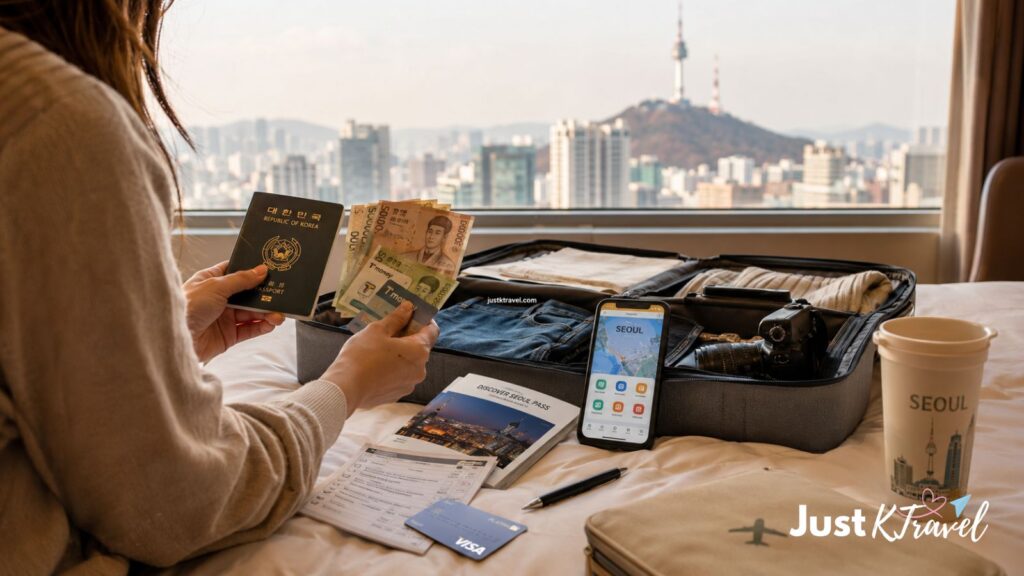
By Richelle (JustKTravel) • Updated July 2026
Table of Contents
TogglePlanning your first trip to South Korea is exciting, but with so many things to organize, it’s easy to overlook something important.
I’ve lived in South Korea for years and always use the same checklist before traveling. It helps me stay organized, avoid last-minute stress, and enjoy my trip from the moment I arrive.
If you’re visiting Korea for the first time, this guide will help you prepare everything you need before your flight.
📝 About This Guide
This checklist is based on my experience living and traveling around South Korea. It covers the essentials every first-time visitor should know, including travel documents, transportation, internet, payment methods, packing tips, and useful travel apps.
As travel requirements and prices can change, I recommend checking the latest information before your departure.
If this is your first trip, don’t miss my First Time in South Korea? Complete Beginner Travel Guide. It covers everything first-time visitors should know before and during their trip, from transportation and cultural etiquette to practical travel tips.
🇰🇷 Korea Travel Checklist:
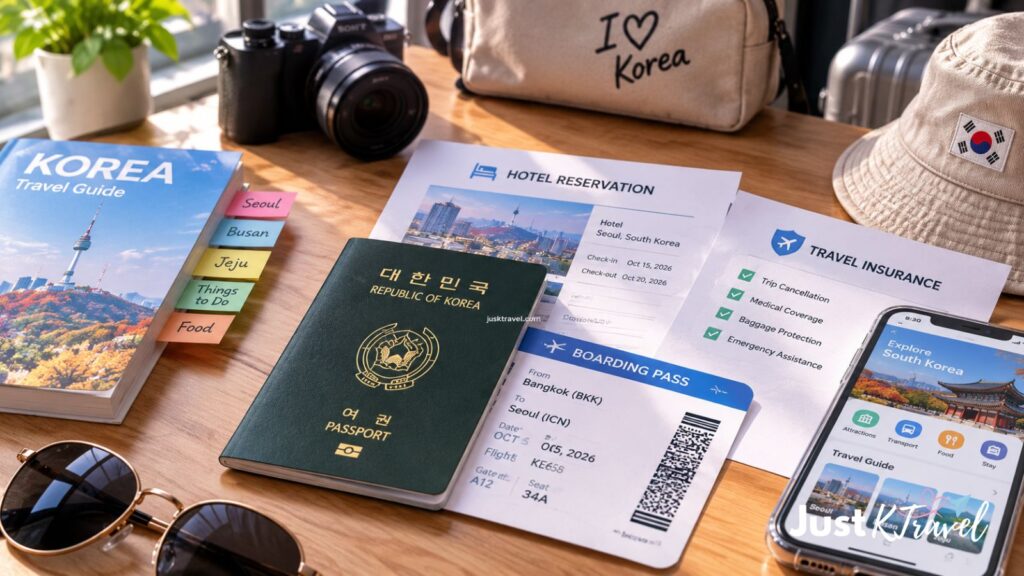
1. Make Sure Your Passport Is Ready
This may sound obvious, but many travelers don’t realize their passport is close to expiring until they’re ready to check in. Checking it well before your departure gives you plenty of time to renew it if needed and avoids unnecessary travel stress.
Before your trip, make sure to:
✅ Your passport is valid for at least six months (if required for your destination)
✅ Save a digital copy on your phone
✅ Print a backup copy and keep it separate from your passport
✅ Email yourself a copy for emergencies
I also keep a photo of my passport in a secure cloud folder. Thankfully, I’ve never needed it, but it’s reassuring to know I can access it if my passport is ever lost or misplaced.
💡 Richelle’s Tip: Keep your passport, boarding pass, and travel documents together in a travel wallet or folder. Having everything in one place makes airport check-in and immigration much quicker and less stressful.
2. Check Korea's Entry Requirements
Travel requirements can change, so always check the latest information before your departure.
Depending on your nationality, you may need:
- Visa
- K-ETA (if applicable)
- Korea Electronic Arrival Card
- Return or onward ticket
- Hotel reservation
- Travel itinerary
I usually save all of these documents in one folder on my phone so I can quickly access them at immigration if needed. If you haven’t booked your accommodation yet, I recommend doing it before your trip. Having your hotel confirmation ready can make your travel plans much smoother, especially if you’re visiting during busy seasons. I usually compare hotel prices on Agoda, as it’s easy to find options for different budgets.
If you’re still deciding where to stay, you might also find my guides to the Best Areas to Stay in Seoul, Best Areas to Stay in Busan, and Best Areas to Stay in Jeju helpful for choosing the right neighborhood.
💡 Richelle’s Tip: Double-check your entry requirements a few weeks before your flight, even if you looked them up when you first booked your trip. Requirements can change, so it’s always worth confirming the latest information before you travel.
3. Book Your Flight Early
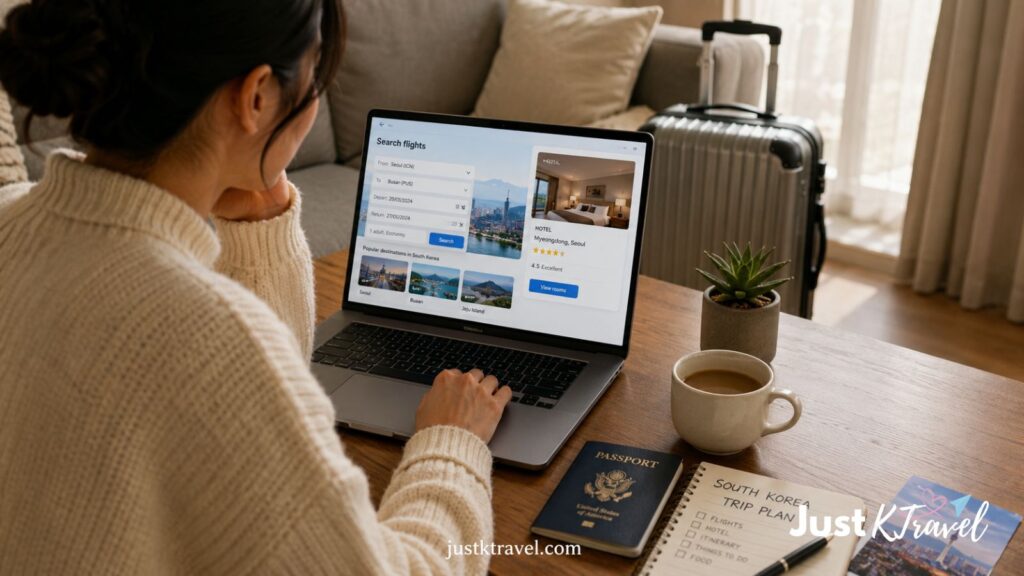
Flights to Korea are often cheaper when booked several months in advance, especially if you’re planning to visit during cherry blossom season, autumn foliage, or major holidays. Booking early also gives you more choices for flight times and airlines.
Tips for finding good airfare
Compare prices on several booking sites.
Be flexible with your travel dates.
Mid-week flights are often less expensive.
Book about 2–4 months ahead for the best selection.
I usually compare flights across a few different websites before booking. Even a small change in your travel dates can sometimes save a significant amount, so it’s worth checking a few options before making your final decision.
✈️ My Booking Tip
Once you’ve decided on your travel dates, compare flight prices early and book as soon as you find a fare you’re happy with. Waiting too long can mean higher prices, especially during Korea’s busiest travel seasons.
👉 Compare the latest flights to South Korea here.
Which airport should you fly into?
Airport | Best For | Good Choice If… |
Incheon International Airport (ICN) | Most international travelers | Visiting Seoul or taking the KTX to other cities |
Gimhae International Airport (PUS) | Busan | Starting your trip in southern Korea |
Jeju International Airport (CJU) | Jeju Island | Flying directly to Jeju |
If you’re arriving at Incheon International Airport, my How to Get from Incheon Airport to Seoul guide compares the AREX train, airport limousine buses, taxis, and private transfers, making it easier to choose the best option for your trip.
4. Reserve Your Hotel
Where you stay can make a huge difference, especially if it’s your first visit to South Korea. Choosing the right neighborhood can save you time, make sightseeing easier, and help you get around using public transportation.
Here are my recommendations:
Area | Best For |
Myeongdong | First-time visitors, shopping, airport access |
Hongdae | Young travelers, nightlife, cafés |
Gangnam | Luxury hotels and business travel |
Haeundae (Busan) | Beach vacations and seafood |
Jeju City | Easy transportation around Jeju Island |
If you’re staying in Seoul for the first time, Myeongdong is still my top recommendation because it’s convenient for sightseeing, has plenty of restaurants and shops, and offers easy access to Incheon Airport.
🏨 My Hotel Booking Tip
I always recommend booking your hotel as early as possible, especially if you’re visiting during cherry blossom season, autumn foliage, or major holidays. Popular hotels in Myeongdong, Busan, and Jeju can sell out weeks in advance.
👉 Compare hotel prices on Agoda before you book.
If you’re still deciding where to stay, these guides can help:
These guides include my recommended neighborhoods, hotel suggestions for different budgets, and tips to help you choose the best area for your trip.
5. Buy a SIM Card or eSIM Before Arrival
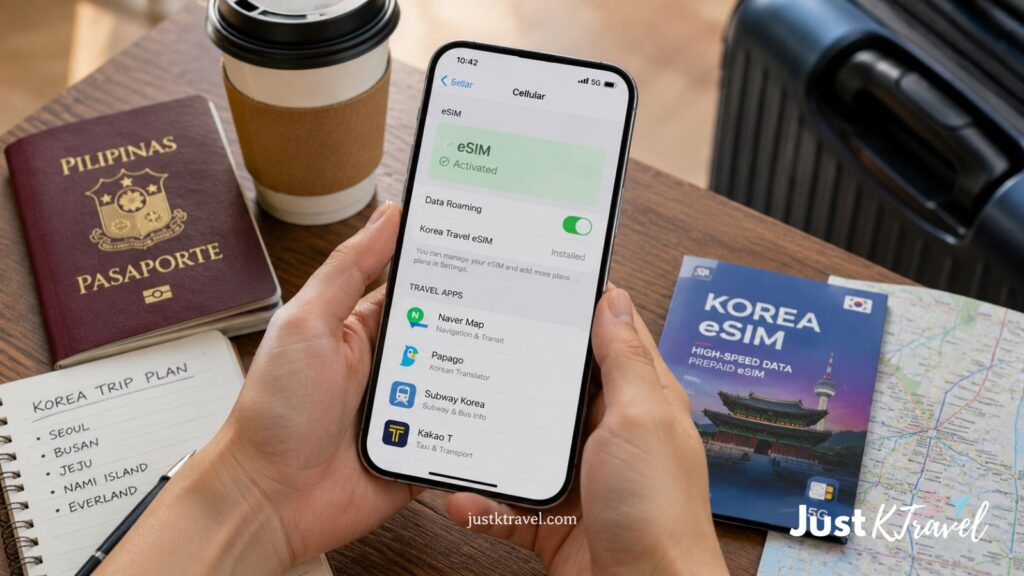
Having the internet as soon as you land makes traveling around Korea much easier. You’ll be able to use maps, book taxis, translate Korean, and contact your hotel without relying on airport Wi-Fi.
Comparison Table: Internet Options in Korea
Option | Best For | Pros | Cons |
eSIM | Most modern phones | Instant activation, no pickup required | Phone must support eSIM |
Physical SIM | Any unlocked phone | Reliable and affordable | Requires installation |
Pocket WiFi | Families and groups | Connect multiple devices | Must carry and recharge |
Personally, I recommend an eSIM whenever possible because it’s incredibly convenient. You can activate it before your flight and have internet as soon as you land, making it much easier to navigate from the airport.
👉 If you’re unsure which option is right for your trip, read my Best SIM Card, eSIM or Pocket WiFi for Korea? guide, where I compare the costs, pros and cons, and help you choose the best option for your travel style.
💡 My Recommendation: I usually book my eSIM before leaving home so everything is ready before departure. If you’re planning to buy one in advance, you can also compare Korea eSIM, SIM card, and Pocket WiFi options on Klook.
6. Prepare Your Transportation
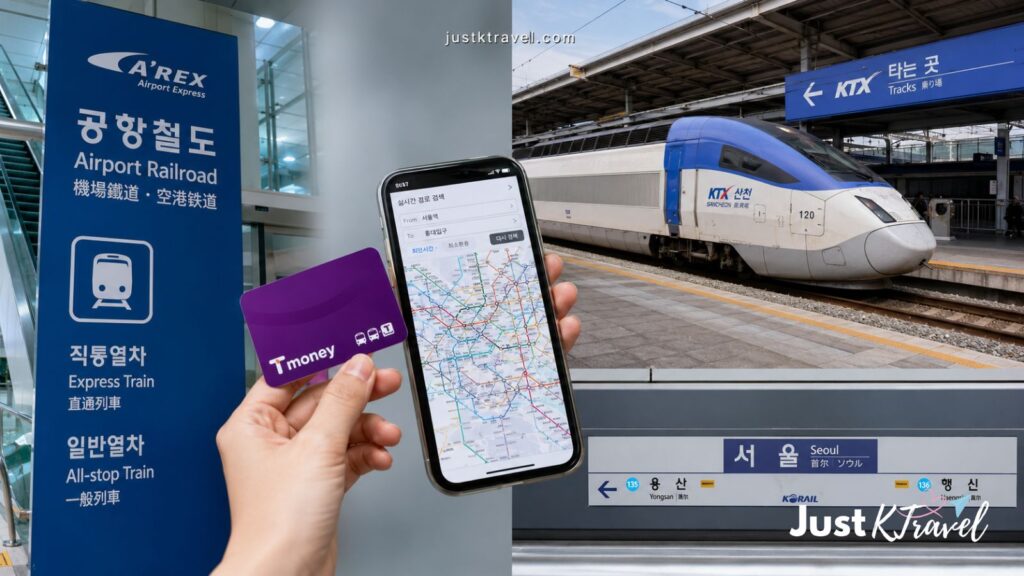
One of my favorite things about traveling in South Korea is how easy it is to get around. The public transportation system is clean, reliable, and connects almost every major tourist destination.
Before arriving, it’s worth deciding which transportation options you’ll use during your trip.
Transportation | Best For | My Recommendation |
T-money Card | Buses, subways, some taxis and convenience stores | A must-have for almost every traveler. |
Climate Card (Seoul only) | Unlimited public transportation in Seoul | Great if you’ll be exploring Seoul for several days. |
AREX Airport Railroad | Traveling between Incheon Airport and Seoul Station | Fast, convenient, and one of my favorite ways to reach the city. |
KTX High-Speed Train | Traveling between cities like Busan, Gyeongju, Jeonju, and Gangneung | Saves time and is ideal for multi-city trips. |
If you’re planning to visit Busan, Gyeongju, Jeonju, or Gangneung, I recommend booking your KTX tickets in advance, especially during weekends, holidays, and peak travel seasons, when popular departures can sell out.
👉 My Recommended Transportation Bookings
Climate Card (Seoul only)
If you’re arriving at Incheon International Airport, don’t miss my How to Get from Incheon Airport to Seoul guide, where I compare the AREX train, airport limousine buses, taxis, and private transfers to help you choose the best option for your trip.
7. Decide How You'll Pay
One question I receive often is whether South Korea is cashless.
The answer is almost—but not completely.
Most restaurants, cafés, convenience stores, and shopping malls accept international credit cards, but it’s still a good idea to carry some Korean Won for:
Traditional markets
Street food
Small local shops
T-money card top-ups
Rural areas
I usually pay with my credit card and only carry a small amount of cash for everyday purchases.
If you’re planning your budget, check out my How Much Money to Bring to Korea guide. You may also find my Cash vs Card in Korea and Best Place to Exchange Money in Korea guides helpful before your trip.
8. Download These Essential Apps
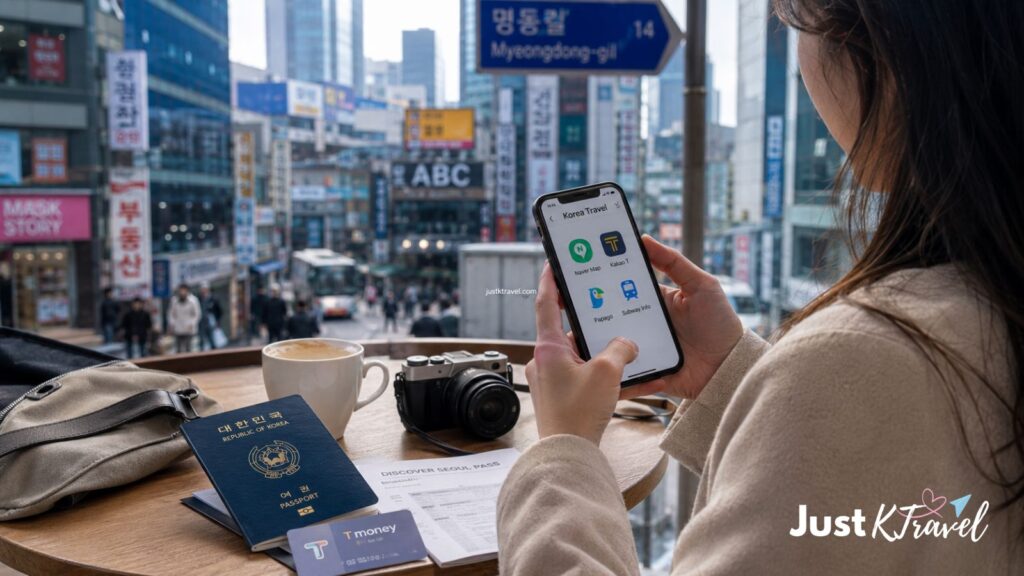
Having the right apps on your phone before you arrive will make getting around South Korea much easier, whether you’re navigating the subway, translating Korean, or booking a taxi.
App | Why You’ll Need It |
Naver Map | Best navigation app |
Kakao Map | Excellent backup map |
Papago | Accurate Korean translation |
Kakao T | Taxi booking |
Subway Korea | Subway routes and transfers |
Google Maps works for basic searches, but I almost always use Naver Map because directions are much more accurate in Korea.
If you’d like to learn more about these apps and how to use them, check out my 15 Essential Apps to Download Before Your Korea Trip guide, where I explain each app in more detail and share the ones I personally use while traveling around Korea.
9. Consider Buying Attraction Passes
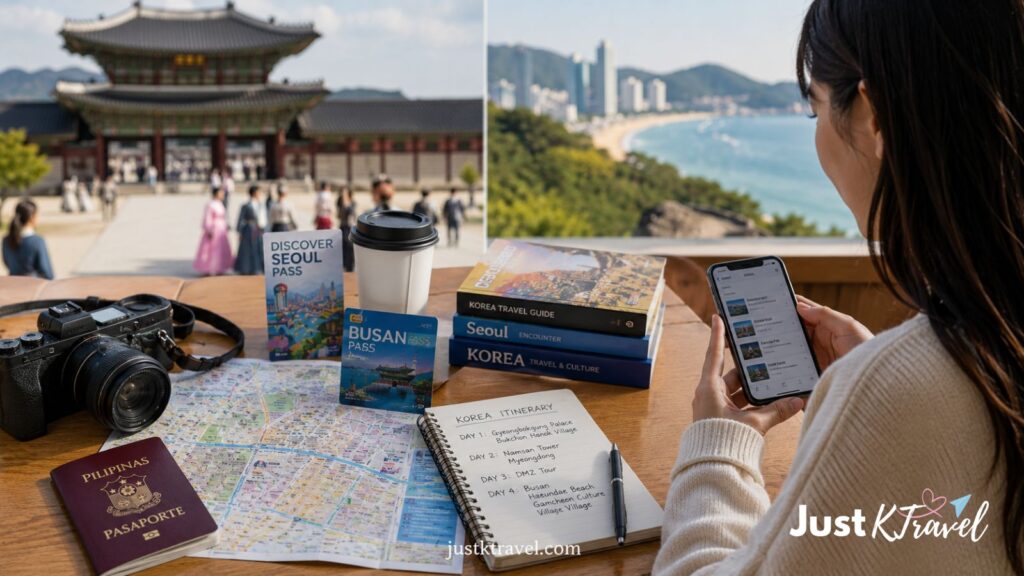
If you’re planning to visit several attractions during your trip, a sightseeing pass can be a great way to save both money and time.
Two of the most popular options are the Discover Seoul Pass and the Visit Busan Pass, both of which can be purchased before your trip through Klook.
These passes often include admission to:
🏯 Palaces
🌆 Observation decks
🖼️ Museums
🚌 Guided tours
🎡 Popular tourist attractions
As a solo and budget traveler, I’ve found these passes especially helpful because they let me visit several attractions in one day without paying for each ticket separately. When I plan my itinerary carefully, they often save me money and make sightseeing much more convenient.
I recommend checking the list of included attractions before buying a pass. If you’ll be visiting several places in one or two days, the pass can easily pay for itself.
If you’re looking for more ideas to add to your itinerary, check out my Things to Do in South Korea Besides Shopping guide, where I share some of my favorite experiences across the country—not just the most popular shopping areas.
10. Pack for Korea's Seasons
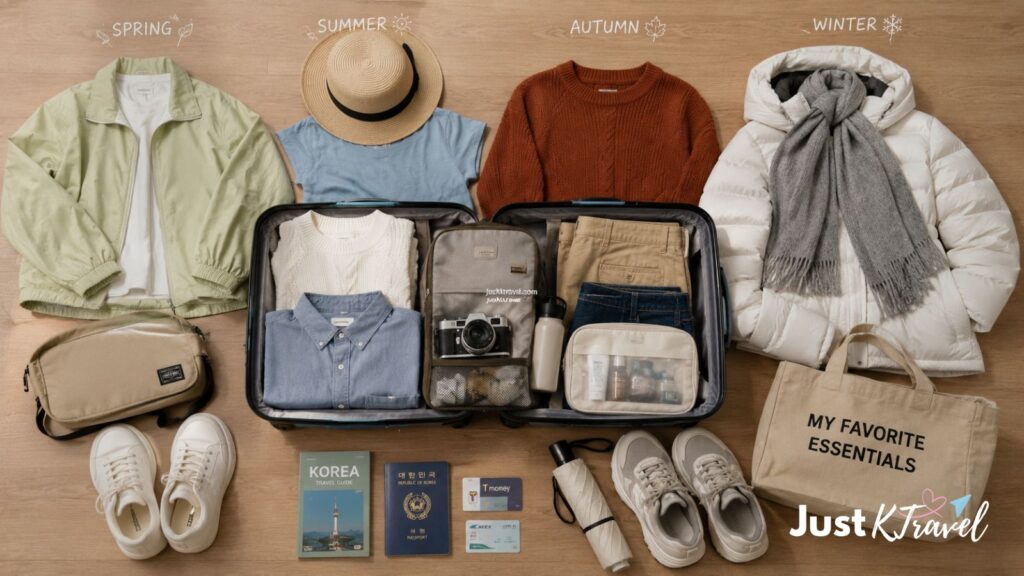
One thing many first-time visitors underestimate is how much Korea’s weather changes throughout the year. Packing for the right season will help you stay comfortable and enjoy your trip even more.
Seasonal Packing Guide
Season | Essentials |
Spring | |
Summer | |
Autumn | |
Winter |
After living and traveling around Korea for years, I’ve learned that packing light but packing smart makes every trip easier. As a solo traveler, I always bring comfortable walking shoes because I often spend the entire day exploring on foot and easily walk more than 15,000 steps. Dressing in layers has also saved me more than once, especially during spring and autumn when the weather can change throughout the day.
If you’re visiting during the warmer months, my Summer in South Korea guide includes what to pack, where to stay, and the best places to escape the heat. Planning an autumn trip? Check out my What to Wear in Korea During Autumn guide for a detailed packing list and outfit ideas.
11. Prepare Your Money
Before traveling, don’t forget these simple steps:
✔ Notify your bank before your trip
✔ Carry a small amount of Korean Won
✔ Exchange some cash before arrival or withdraw from an ATM
✔ Bring a backup credit or debit card
✔ Keep emergency funds separate
Having two different payment methods gives you peace of mind if one card doesn’t work.
If you’re still planning your travel budget, check out my How Much Money to Bring to Korea guide. You may also find my Best Place to Exchange Money in Korea guide helpful for getting the best exchange rates.
12. Buy Travel Insurance
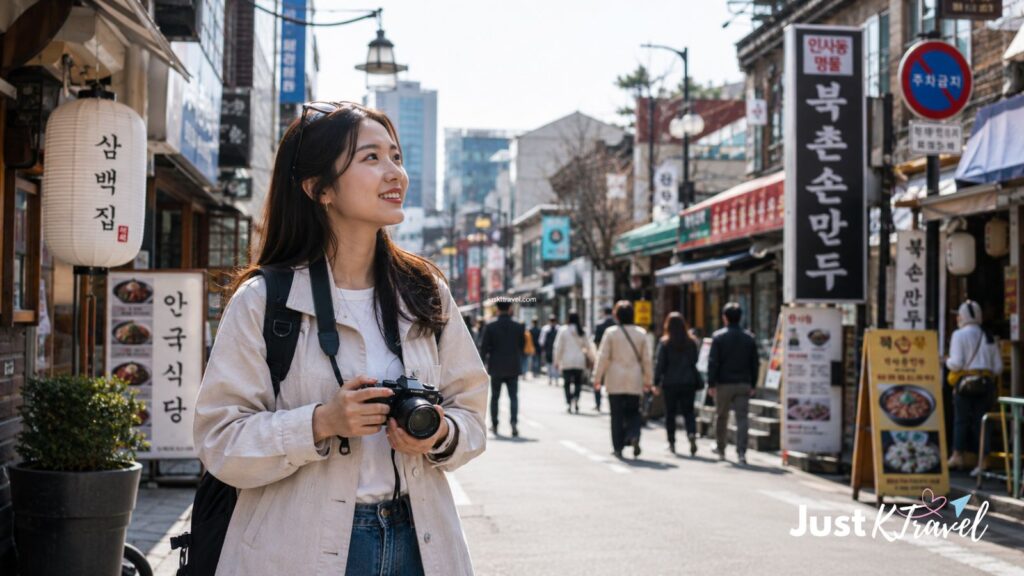
Travel insurance isn’t something you hope to use, but it’s one of those things you’ll appreciate if something unexpected happens.
It can help cover:
Medical emergencies
Flight delays
Lost baggage
Trip cancellations
Emergency assistance
Compared to the overall cost of your trip, travel insurance is usually affordable and can provide valuable peace of mind.
💡 From My Experience: Even when I’m just flying within Korea for a weekend trip, I usually buy travel insurance for the extra peace of mind. Thankfully, I’ve never had to make a claim, but knowing I’m covered for unexpected delays, lost luggage, or emergencies lets me enjoy my trip without worrying about what could go wrong. For international trips, I think it’s even more worthwhile.
13. Save Important Information
Before leaving home, save these details somewhere you can access offline:
Passport copy
Hotel address
Flight details
Embassy contact information
Emergency contacts
Travel insurance policy
Booking confirmations
I also download screenshots of my hotel reservation and flight confirmation because airport Wi-Fi isn’t always available immediately after landing. It only takes a few minutes, but it can save you a lot of stress if your phone loses signal or something important goes missing.
If you ever lose your passport, wallet, or other valuables during your trip, my Lost Something in Korea? Exactly What To Do (Step-by-Step Guide for Tourists) will walk you through what to do and who to contact.
14. Learn a Few Korean Phrases
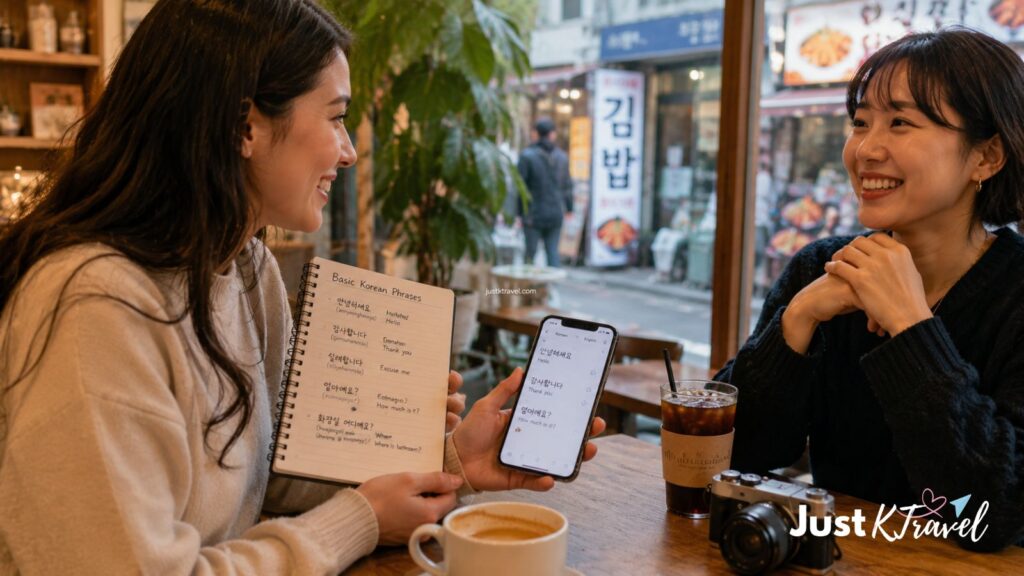
You don’t need to speak Korean fluently, but knowing a few simple expressions can make interactions friendlier. While many people in tourist areas speak some English, using a few Korean words is always appreciated.
English | Korean |
Hello | Annyeonghaseyo (안녕하세요) |
Thank you | Gamsahamnida (감사합니다) |
Excuse me | Sillyehamnida (실례합니다) |
Where is…? | Eodi isseoyo? (어디 있어요?) |
How much? | Eolmayeyo? (얼마예요?) |
From my experience, simply saying “Annyeonghaseyo” or “Gamsahamnida” often makes interactions feel warmer, and locals usually appreciate visitors making the effort to use a few Korean words.
For more practical etiquette and tips to help you avoid common travel mistakes, check out my 20 Common Tourist Mistakes in Korea (Avoid These!) guide.
✅ Final Korea Travel Checklist
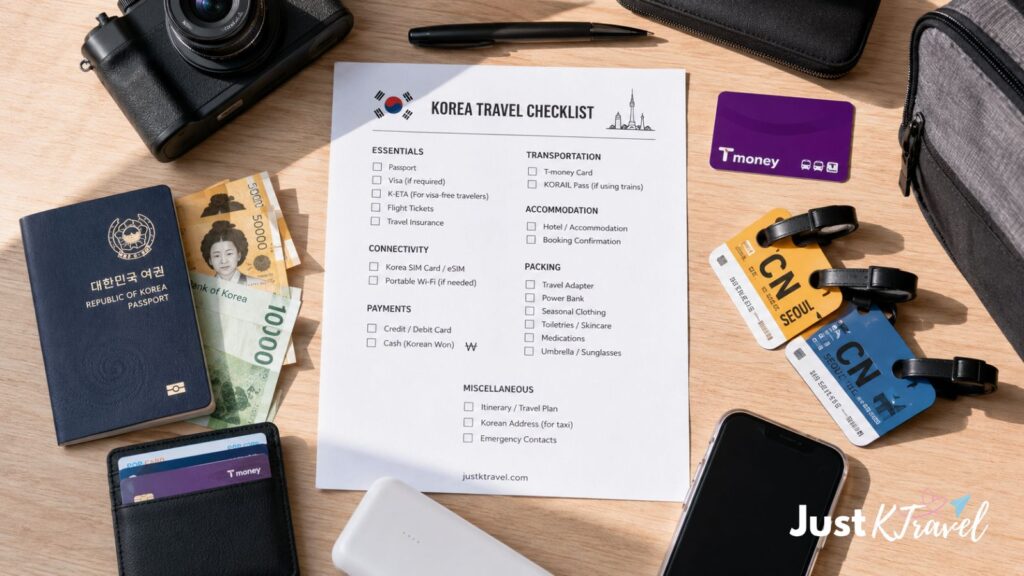
Before heading to the airport, do one final check to make sure everything is ready for your trip.
📄 Travel Documents
☐ Passport
☐ Visa or K-ETA (if applicable)
☐ Korea Electronic Arrival Card
☐ Flight booked
☐ Hotel reservation
☐ Travel insurance
☐ Emergency contacts saved
📱 Travel Essentials
☐ eSIM or SIM card activated
☐ T-money Card (or plan to buy one)
☐ Naver Map installed
☐ Papago downloaded
☐ Airport transfer planned
☐ KTX tickets booked (if needed)
☐ Attraction passes purchased (if needed)
💳 Money
☐ Credit or debit card
☐ Korean Won (cash)
☐ Backup payment method
🎒 Packing
☐ Packed for the season
☐ Chargers and power bank
☐ Travel adapter (if needed)
☐ Prescription medications (if needed)
Once you’ve checked everything off, you’re ready to enjoy your South Korea adventure. Safe travels, and have an amazing trip! Download your copy here.
💡 Extra Tips From My Experience
After traveling around South Korea for years, these are a few simple things that have made my trips much easier:
💧 Bring a reusable water bottle—there are refill stations in many public places.
🔋 Carry a portable power bank, especially if you’ll be using maps and taking lots of photos.
👟 Wear comfortable walking shoes. It’s easy to walk 15,000–20,000 steps in a day without realizing it.
🛍️ Don’t overpack. If you forget something, you’ll usually be able to buy it easily in Korea.
💵 Keep a small amount of cash for street food, traditional markets, and smaller local shops.
🎟️ If you’re visiting during spring or autumn, book popular attractions, tours, and transportation in advance, as these are Korea’s busiest travel seasons. I usually reserve activities through Klook before I arrive to avoid missing out.
These small preparations have saved me time, reduced stress, and helped me enjoy every trip even more.
Frequently Asked Questions
What should I prepare before traveling to Korea?
Have your passport, travel documents, hotel booking, internet option (eSIM or SIM), payment methods, and transportation plans ready before you fly.
How much cash should I bring?
Carry a small amount of Korean Won for markets, street food, and small shops. Most other places accept credit cards.
Do I need a T-money Card?
Yes, if you’ll be using buses or the subway. It makes getting around Korea much easier and more convenient.
Can I use foreign credit cards in Korea?
Yes. Visa and Mastercard are widely accepted, but it’s always a good idea to carry a backup card and some cash.
Which apps should I download?
I recommend Naver Map, Papago, Kakao T, and Subway Korea to help with navigation, translation, and transportation.
Final Thoughts
Preparing for your trip to South Korea doesn’t have to be overwhelming. A little planning before you leave can save you time, reduce stress, and help you enjoy your trip from the moment you arrive.
I still use this checklist whenever I travel around Korea because it keeps everything organized and lets me focus on exploring new places, trying delicious local food, and making the most of each trip.
If it’s your first visit, don’t worry about getting everything perfect. Korea is one of the easiest countries to explore thanks to its excellent public transportation, reliable internet, and friendly locals. With this checklist, you’ll be well prepared to enjoy everything from bustling cities and beautiful scenery to unforgettable food and experiences.
Safe travels, and I hope you enjoy South Korea as much as I do!
Here are some food guides to help you plan:
🍽️ Where to Eat in Myeongdong: 10 Best Restaurants for First-Time Visitors
Discover beginner-friendly restaurants in one of Seoul’s most popular areas.
🍽️ 10 Best Places to Eat in Hongdae for First-Time Visitors
Great options for cafés, Korean food, and casual dining around this lively neighborhood.
🍽️ 10 Best Cheap Restaurant Chains in Korea for Solo Travelers
My budget-friendly recommendations for solo travelers who want tasty meals without spending too much.
🍽️ Best Restaurants in Insadong: 8 Must-Try Places for First-Time Visitors
Perfect if you want to try traditional Korean food while exploring a historic Seoul neighborhood.
🍽️ 10 Best Restaurants Near Haeundae Beach, Busan
Helpful if you’re planning a Busan trip and want great food near the beach.
🍽️ Best Restaurants Near Gwangalli Beach, Busan
Enjoy delicious meals with beautiful views of Gwangan Bridge.
👤 About the Author
Hi, I’m Richelle, the creator of Just KTravel, based in South Korea.
I share simple and practical Korea travel guides from my own experience — including seasonal spots, transport tips, hidden places, and easy itineraries.
I started this blog after visiting Korea as a traveler myself, and now I write to help others plan their trips with less stress and more confidence.
My goal is to make Korea travel easier and more enjoyable for everyone, especially first-time visitors.
💬 Need Help Planning Your Korea Trip?
Have questions about traveling in Korea or planning your itinerary?
Join our Korea Travel Facebook community where travelers share real experiences, tips, and advice on transportation, accommodation, and seasonal travel in South Korea.
Disclosure:
This post may contain affiliate links to services and experiences I recommend based on personal use. If you make a booking through them, I may earn a small commission at no extra cost to you. I really appreciate your support for Just KTravel.