
🇰🇷 11 Korean Street Foods First-Time Visitors Should Try (Seoul, Busan & Jeju Guide)
By Richelle (JustKTravel) • Updated June 2026
Table of Contents
ToggleIf it’s your first time visiting South Korea, trying Korean street food is a must-do experience.
You’ll find street food everywhere — from busy night markets in Seoul and Busan to small local food alleys near subway stations.
Korean street food is:
🔥 Affordable (usually ₩2,000–₩6,000 per item)
🍢 Full of bold sweet, spicy, and savory flavors
📍 Easy to find in night markets and shopping streets
🧑🍳 Cooked fresh right in front of you
👉 Many travelers say street food is one of the most memorable parts of their Korea trip.
🛍️ Quick Answer: Must-Try Korean Street Food
If you’re short on time, start with these popular options:
🌶️ Tteokbokki – spicy rice cakes in red chili sauce
🍯 Hotteok – sweet Korean pancake with brown sugar filling
🧀 Korean Corn Dog – crispy fried cheese or sausage stick
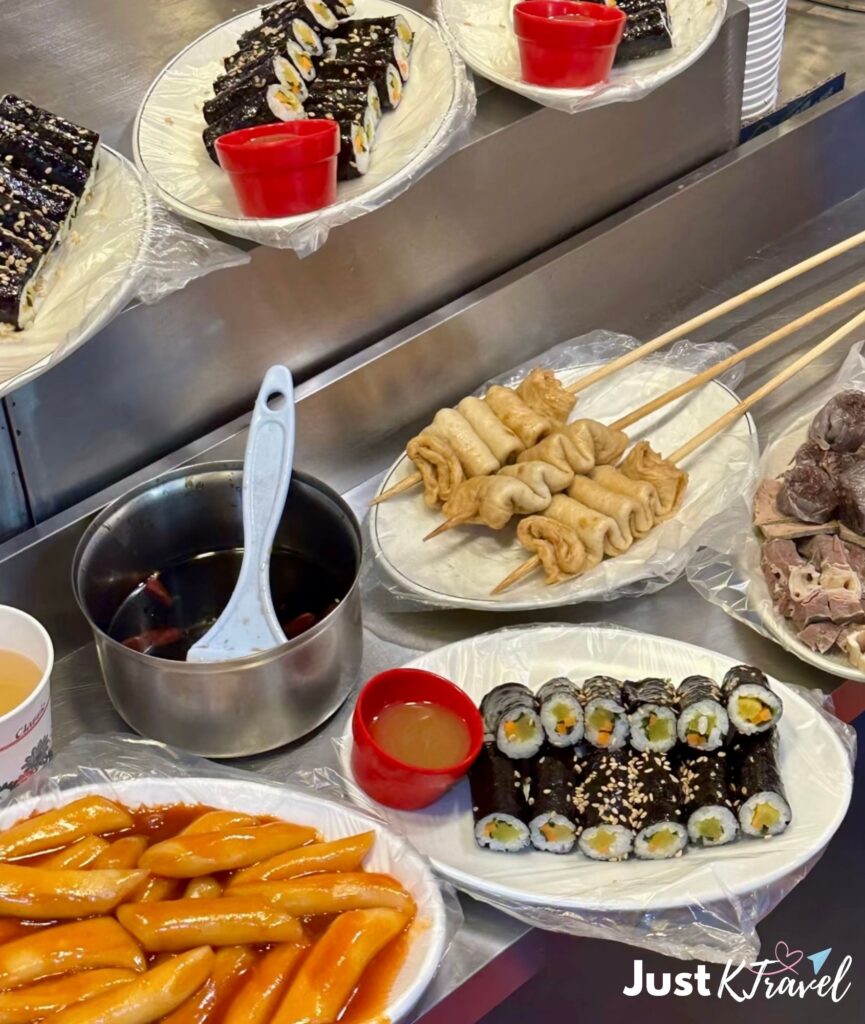
🐟 Eomuk (Fish Cake Skewers) – warm street-side comfort food
🍗 Dakkochi – grilled chicken skewers with sweet soy glaze
🍜 Where to Try Korean Street Food
You can easily find these foods in:
Myeongdong Street (Seoul)
Gwangjang Market (Seoul)
Seomyeon Food Alley (Busan)
Haeundae Night Markets (Busan)
💡 If you’re planning your stay in Seoul, choosing the right area can help you access the best night markets and food streets easily.
👉 Best Areas to Stay in Seoul for First-Time Visitors (2026 Guide)
✈️ Before You Travel to Korea
To make your trip smoother, it’s important to plan your arrival and connectivity before landing in Korea.
This includes choosing your airport transfer, accommodation area, and mobile data setup.
👉 How to Get from Incheon Airport to Seoul (2026 Guide to Airport Transfer Options)
👉 Best SIM Card, eSIM or Pocket WiFi for Korea (2026 Tourist Guide)
🌶️ 1. Tteokbokki (떡볶이)
Type: Spicy rice cakes
Taste: Spicy + slightly sweet + savory
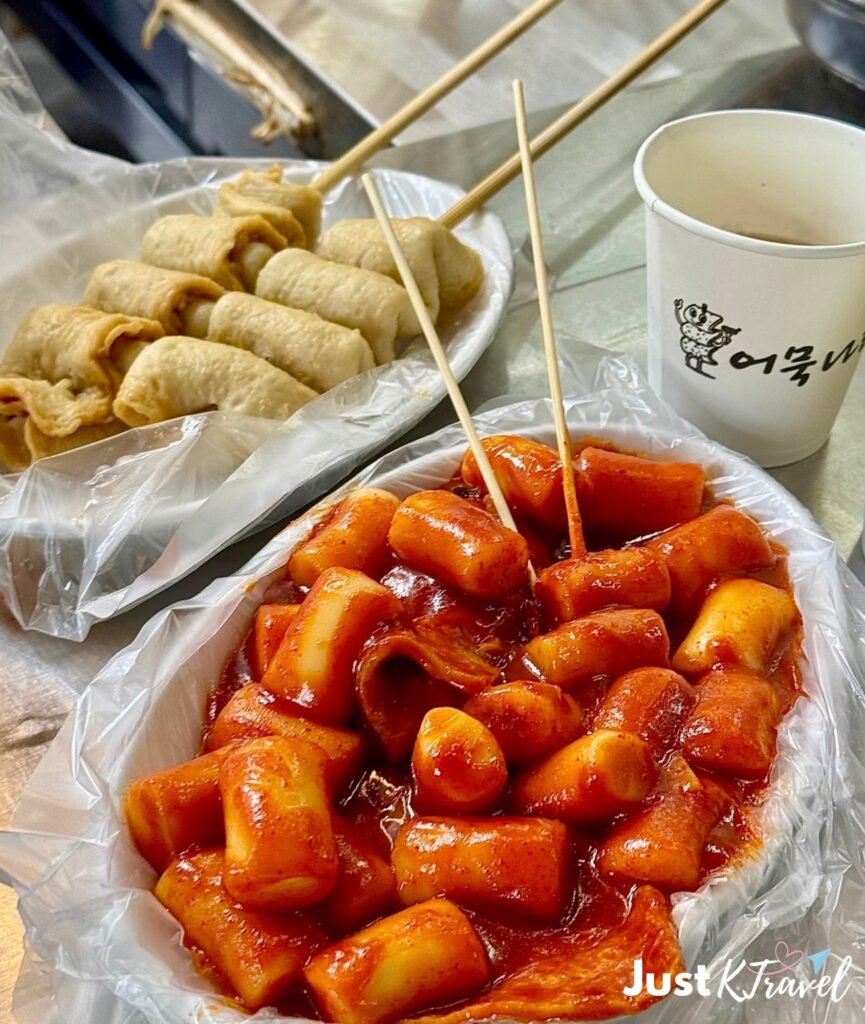
Tteokbokki is one of the most iconic Korean street foods—you’ll often spot it first because of its bright red sauce bubbling in large street-side pans. It is chewy, spicy, and slightly sweet, making it a must-try dish for first-time visitors in Korea.
If you’re not used to spicy food, you can try “rose tteokbokki”, which is made with cream-based sauce and tastes much milder.
🍢 Why travelers love it
✔ One of the most popular Korean street foods
✔ Very affordable and filling
✔ Easy to find in night markets and food streets
✔ Frequently seen in Korean dramas and variety shows
💡 My Personal Experience
I tried the regular tteokbokki during my visit, and I found it very spicy, especially as a first-time experience with Korean street food.
That’s why my favorite version became rose tteokbokki. It is still slightly spicy, but much creamier and smoother, which makes it easier to enjoy without being overwhelmed by the heat.
⚠️ Things to know before trying
Can be very spicy for beginners
Best enjoyed fresh while hot
Pairing it with drinks or soup helps balance the flavor
💰 Price range
₩3,000 – ₩5,000 per serving
📍 Where to eat Tteokbokki
Seoul: Myeongdong Street, Gwangjang Market
Busan: BIFF Square (Nampo-dong area)
Jeju: Dongmun Traditional Market
💡 Many of these food spots are located in central tourist areas, so staying nearby can make it easier to explore Korea’s night markets and street food culture.
🎁 Bonus Tip: Try Local Snacks Too
If you enjoy Korean street food, you may also want to bring some flavors home with you. Many of the snacks you try on the streets are also available in packaged versions at convenience stores and markets.
👉 🇰🇷 What Korean Snacks Should You Bring Home? (2026 Ultimate Guide)
💡 Extra Tip
Pair tteokbokki with eomuk (fish cake soup) to balance the spice and get a more traditional street food experience.
🍯 2. Hotteok (호떡)
Type: Sweet Korean pancake
Taste: Sweet, warm, cinnamon, nutty
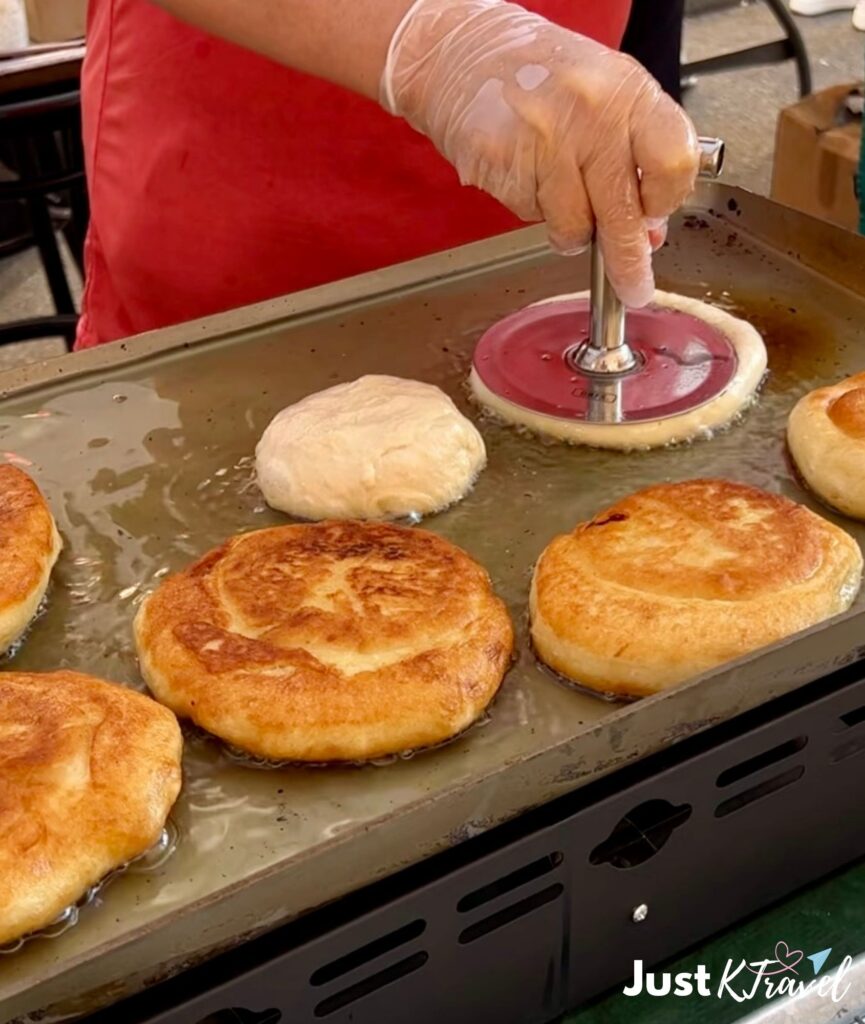
Hotteok is one of Korea’s most popular winter street snacks. It is crispy on the outside and filled with a gooey, sweet filling inside, often made with brown sugar, cinnamon, and crushed nuts.
It’s especially comforting during colder months when it’s freshly cooked on street griddles.
🍴 Why travelers love it
✔ Perfect cold-weather street snack
✔ Cheap and filling dessert
✔ Freshly cooked in front of you
✔ Different regional variations across Korea
💡 My Personal Experience
I personally enjoy hotteok with a honey filling, but I also really liked the seed hotteok in Busan, which has a nuttier and richer flavor. In Namdaemun Market (Seoul), I tried the japchae hotteok, which was more savory and unique compared to the classic sweet version.
Each region in Korea offers a slightly different style, which makes trying hotteok in different cities part of the experience.
💰 Price range
₩1,500 – ₩3,000 per piece
📍 Where to eat Hotteok
Seoul: Namdaemun Market
Busan: BIFF Square (famous for seed hotteok)
Jeju: Dongmun Traditional Market
💡 Street food spots like these are easy to explore, but having the right travel apps (for maps, translation, and transport) makes finding food stalls much easier in busy markets.
👉 ✈️📱 15 Essential Apps to Download Before Your Korea Trip (2026 Tourist Guide)
🧀 3. Korean Corn Dog (핫도그)
Type: Fried street snack
Taste: Sweet, savory, and cheesy
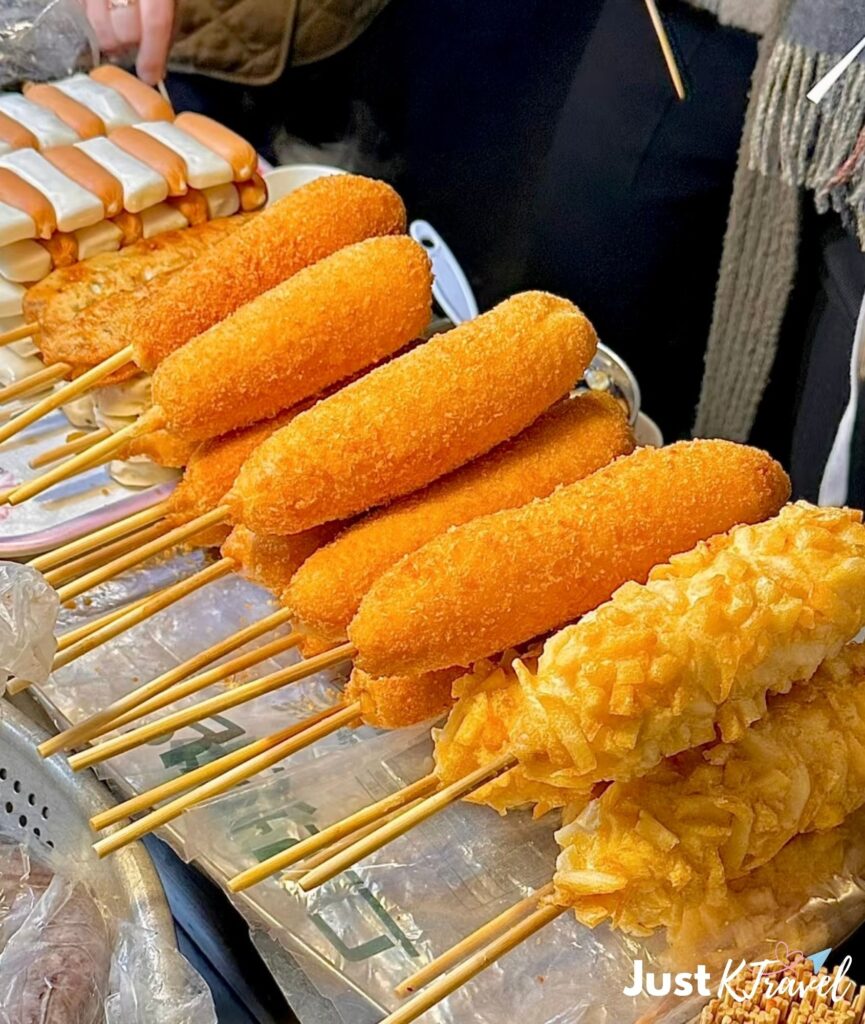
Korean corn dogs are a popular street food snack known for their crispy outer layer and fun fillings such as mozzarella cheese, sausage, potato cubes, or even sugar coating.
They are especially popular among younger travelers and are often found in busy shopping streets and night markets.
🍴 Why travelers love it
✔ Unique Korean twist on a classic corn dog
✔ Extra cheesy and satisfying
✔ Great for on-the-go snacking
✔ Popular social media and “Instagram food”
💰 Price range
₩3,000 – ₩5,000 per piece
📍 Where to eat Korean Corn Dog
Seoul: Hongdae Street Food Area
Busan: Haeundae Traditional Market
Jeju: Dongmun Market
💡 If you’re planning to stay near these areas, choosing budget-friendly accommodation close to major food streets can make it easier to explore Korea’s night markets and street food culture.
👉 Budget-Friendly Solo Accommodation Guide in Seoul
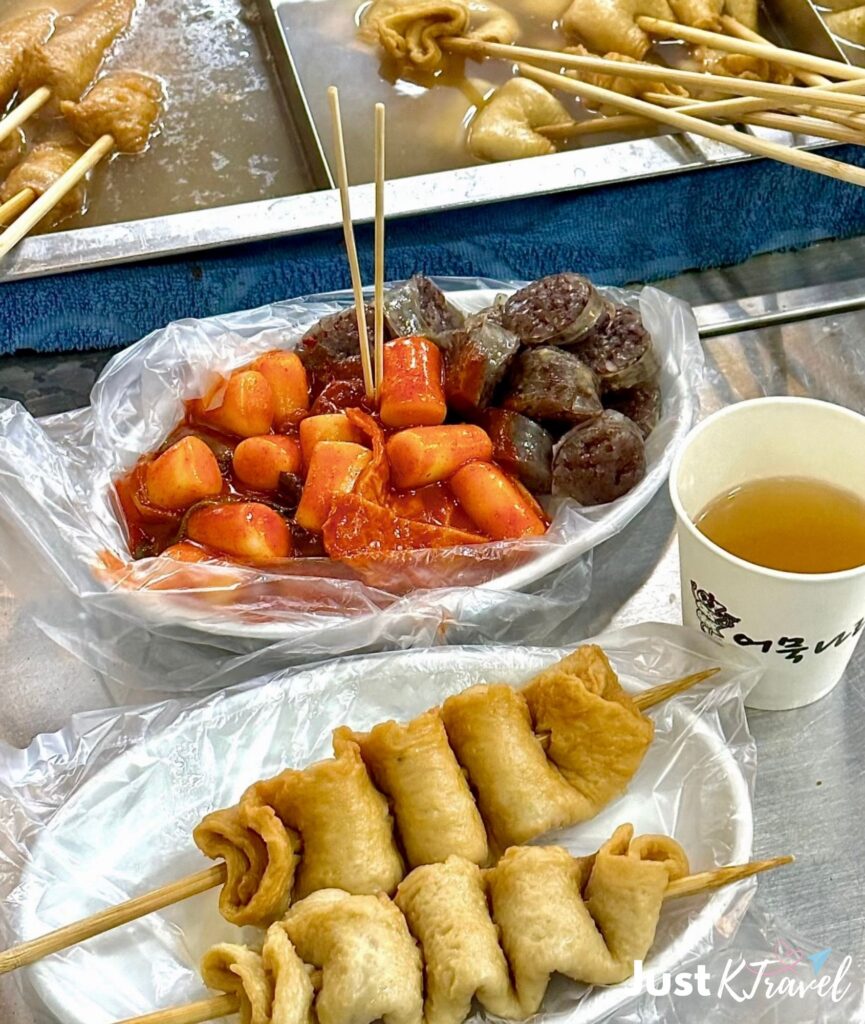
🐟 4. Eomuk (어묵)
Type: Fish cake skewers in hot broth
Taste: Light, savory, warm comfort food
Eomuk (fish cake skewers) is one of the most common and comforting Korean street foods, especially popular during colder months. It is usually served in a warm, slightly salty broth that helps balance stronger flavors from other street foods like tteokbokki.
🍴 Why travelers love it
✔ Very light and easy to eat while walking
✔ Perfect for cold weather travel in Korea
✔ Affordable and widely available
✔ Great “reset snack” between heavier foods
💰 Price range
₩1,000 – ₩2,000 per skewer
💡 Travel Tip
Eomuk is often sold at small street stalls near subway exits and traditional markets, making it easy to grab while exploring the city.
📍 Where to eat Eomuk
Seoul: Gwangjang Market
Busan: Jagalchi Market (highly recommended for freshest taste)
Jeju: Seogwipo Olle Market
💡 If you’re visiting Busan, don’t miss trying the local eomuk version near Jagalchi Market, where seafood is fresher and the flavor is slightly richer compared to Seoul stalls.
👉 Best Areas to Stay in Busan for First-Time Visitors (2026 Guide)
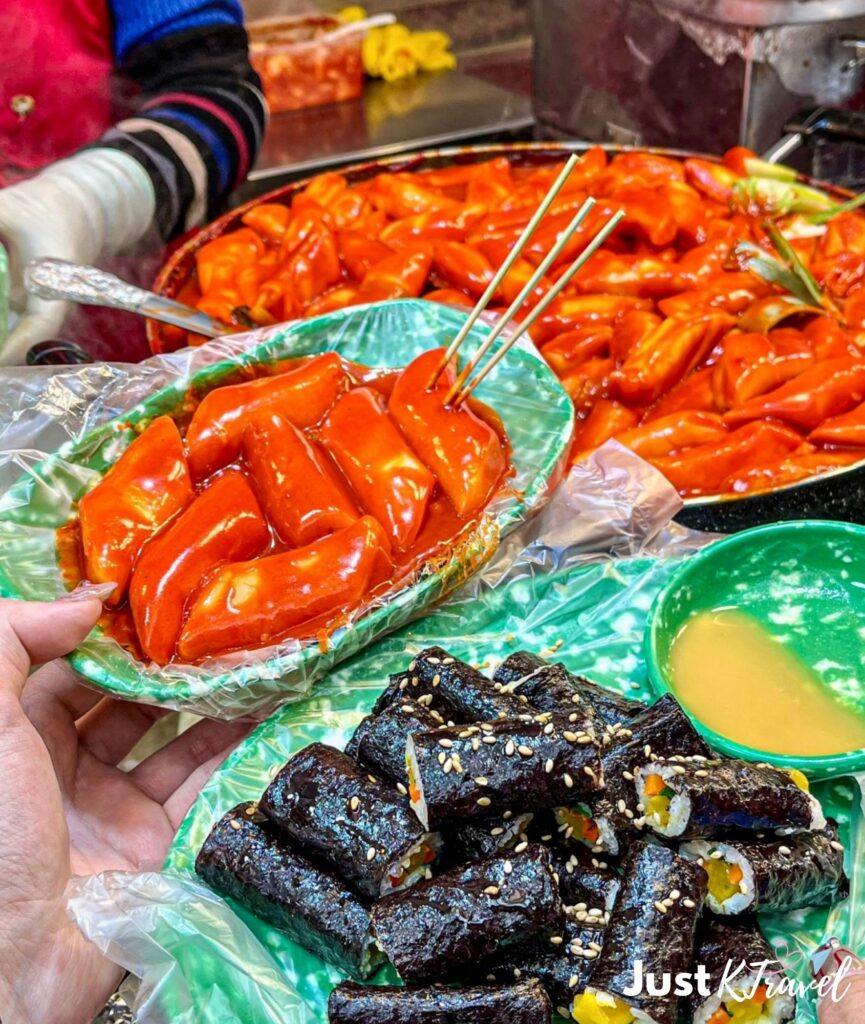
🍙 5. Gimbap (김밥)
Type: Korean rice rolls
Taste: Savory, light, slightly nutty
Gimbap is one of the most popular grab-and-go meals in Korea. It is often compared to sushi, but it has a different flavor profile because it is typically seasoned with sesame oil instead of vinegar.
It is a common street food and convenience meal, perfect for travel days or quick snacks while exploring the city.
🍴 Why travelers love it
✔ Affordable and filling meal option
✔ Easy to eat while traveling or sightseeing
✔ Widely available across Korea
✔ Comes in many varieties (tuna, kimchi, beef, cheese, etc.)
💡 My Personal Experience
My personal favorites are tuna gimbap and kimchi gimbap.
Tuna gimbap is mild, creamy, and very easy to eat, making it a good option for beginners. Kimchi gimbap, on the other hand, has a stronger and slightly spicy flavor, which I enjoyed more when I wanted something with a bit more taste.
Both are simple but satisfying, especially when you’re eating on the go while traveling around Korea.
💰 Price range
₩3,000 – ₩5,000 per roll
📍 Where to eat Gimbap
Seoul: Tongin Market (famous lunchbox experience)
Busan: BIFF Square
Jeju: Dongmun Market
💡 If you’re exploring Busan beyond the main tourist areas, you’ll also find great local gimbap shops in smaller neighborhoods and markets that offer more authentic and affordable options.
👉 🌊 My Personal Favorite Spots in Busan: Places I Always Recommend Beyond Haeundae (2026 Guide)
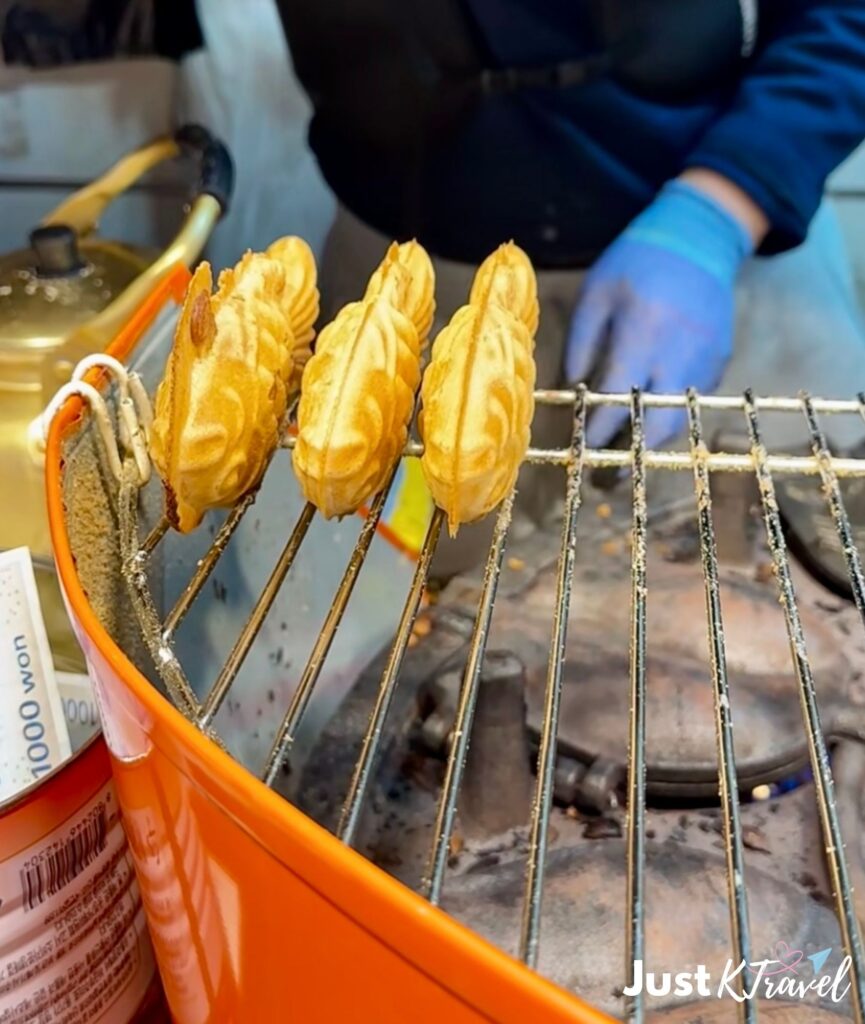
🐟 6. Bungeoppang (붕어빵)
Type: Fish-shaped pastry
Taste: Sweet, warm, crispy outside with soft filling
Bungeoppang is one of Korea’s most popular winter street desserts. It is shaped like a fish and usually filled with sweet red bean paste or custard cream, served fresh and warm from street vendors.
The crispy exterior and soft filling make it a comforting snack during cold weather.
🍴 Why travelers love it
✔ Classic Korean winter street snack
✔ Cheap and widely available
✔ Freshly baked on the spot
✔ Perfect dessert after savory street food
💡 My Personal Experience
My favorite versions are the custard filling and especially the strawberry custard cream.
Compared to the traditional red bean filling, these are sweeter, creamier, and more enjoyable if you prefer dessert-style flavors over beans.
💰 Price range
₩1,000 – ₩2,000 per piece
📍 Where to eat Bungeoppang
Seoul: Myeongdong, Hongdae street vendors
Busan: Seomyeon and Haeundae area
Jeju: Dongmun Market
💡 You’ll find bungeoppang stalls mostly in winter months (November–March), especially around busy shopping streets and subway exits.
💡 In Jeju, street snacks like bungeoppang are best enjoyed while exploring local markets and coastal areas. Choosing the right area to stay can also make it easier to access popular food spots and attractions across the island.
👉 🌊☀️ Best Areas to Stay in Jeju for First-Time Visitors (2026 Guide)
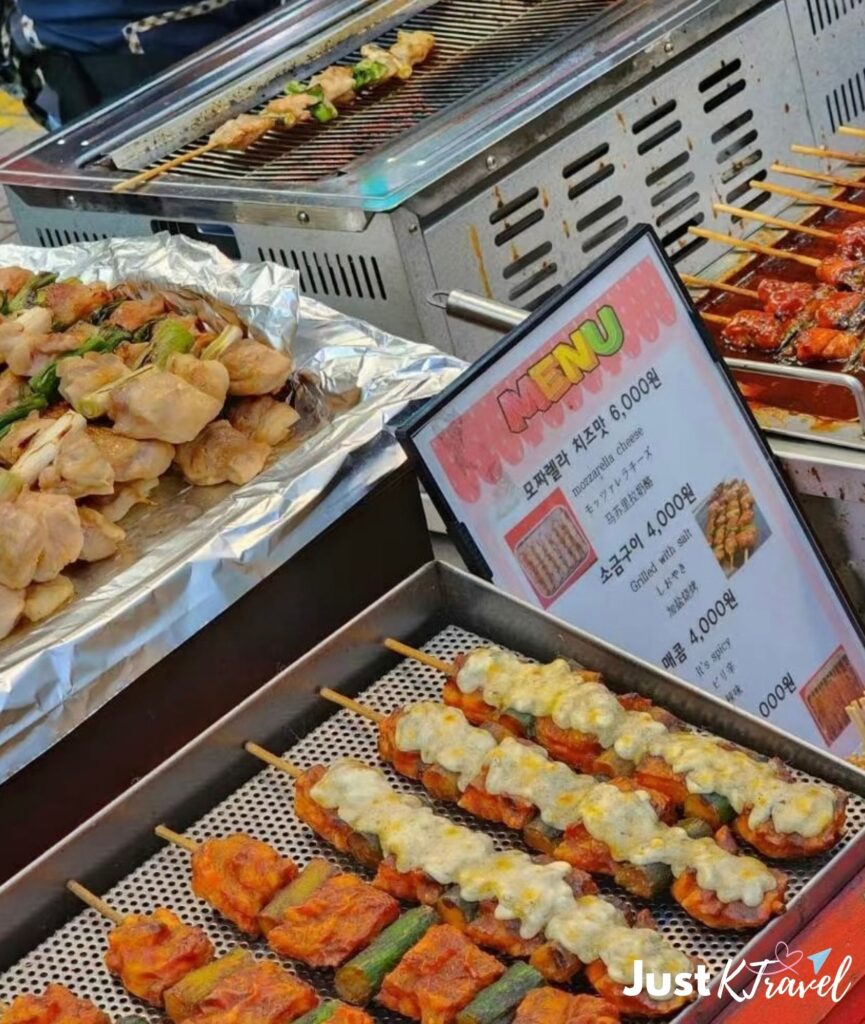
🍢 7. Dakkochi (닭꼬치)
Type: Grilled chicken skewers
Taste: Savory, slightly sweet, or spicy
Dakkochi is a popular Korean street food made of grilled chicken skewers, usually brushed with sweet soy sauce or spicy chili glaze. It’s a common snack found in night markets and busy shopping streets.
🍴 Why travelers love it
✔ Freshly grilled and made on the spot
✔ Flavor options: sweet soy, spicy, or garlic
✔ Easy street snack while walking
✔ Affordable and filling
💡 My Personal Experience
I found dakkochi very affordable in Hongdae, especially right outside Exit 8, where several street food stalls sell freshly grilled skewers.
It’s one of the best places to try it because the prices are cheaper compared to other tourist-heavy areas, and there are many stalls close together so you can compare different flavors easily.
💰 Price range
₩6,000 – ₩8,000 per skewer
📍 Where to eat Dakkochi
Seoul: Hongdae Exit 8 street food area
Busan: BIFF Square
Jeju: Dongmun Market
💡 If you’re staying in Hongdae, choosing accommodation nearby makes it easy to explore street food areas at night without long subway rides.
👉 Compare hotels in Hongdae (Seoul) – Budget & convenient stays
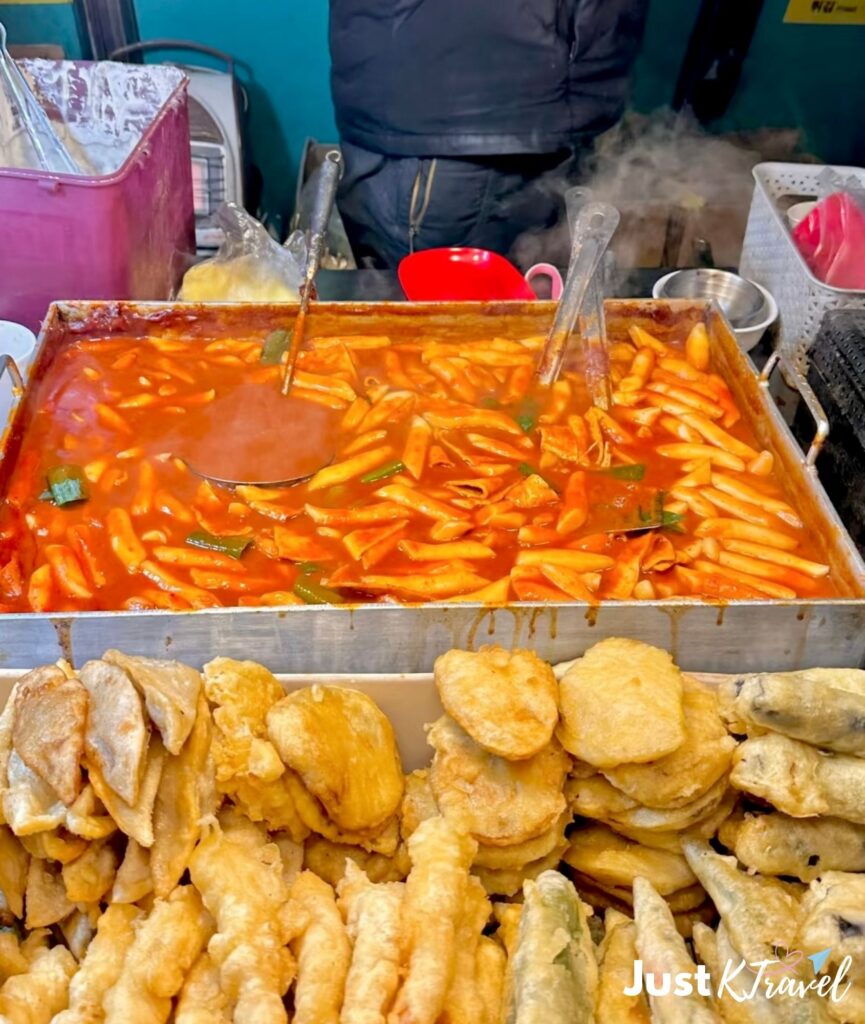
🍤 8. Twigim (튀김)
Type: Korean-style tempura (fried snacks)
Taste: Crispy, savory
Twigim is a popular Korean street food made of deep-fried ingredients such as shrimp, squid, sweet potato, seaweed rolls, and vegetables. It is usually served in small portions and is often enjoyed as a side dish with tteokbokki.
🍴 Why travelers love it
✔ Crispy and freshly fried street snack
✔ Variety of ingredients in one order
✔ Commonly paired with other Korean street foods
✔ Affordable and easy to share
💡 My Personal Experience
I usually eat twigim together with rose tteokbokki, using the sauce as a dip for extra flavor. The creamy and slightly spicy sauce makes the fried texture even better and more enjoyable compared to eating it on its own.
💰 Price range
₩3,000 – ₩5,000 per portion
📍 Where to eat Twigim
Seoul: Gwangjang Market, Myeongdong street stalls
Busan: BIFF Square
Jeju: Dongmun Market
💡 Twigim is best enjoyed fresh and hot, especially when paired with tteokbokki for a full street food experience.
💡 If you’re planning a trip that includes both Busan and Seoul, choosing the right area to stay in Seoul can make your overall itinerary much easier and save travel time between attractions.
Many first-time visitors prefer staying in well-connected neighborhoods that offer easy access to transportation, food, and major landmarks.
👉 Best Areas to Stay in Seoul for First-Time Visitors (2026 Guide)
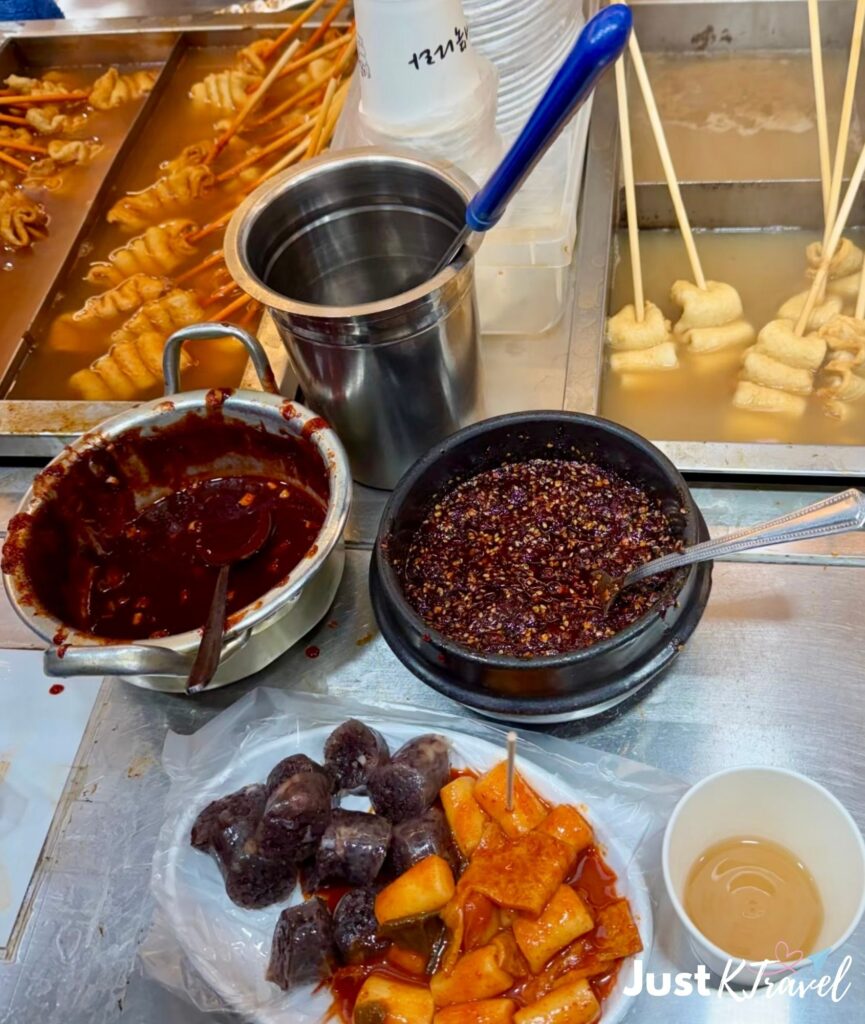
🌭 9. Sundae (순대)
Type: Korean blood sausage
Taste: Savory, earthy, slightly chewy
Sundae is a traditional Korean street food made with glass noodles, rice, and pork blood stuffed into a casing. It is often served sliced with salt, chili powder, or alongside other street foods.
It is a common dish in markets and street food stalls, especially paired with tteokbokki or eomuk.
🍴 Why travelers try it
✔ Traditional Korean street food experience
✔ Commonly paired with other dishes
✔ Available in most traditional markets
✔ Often served with soup (sundae-guk)
💡 My Personal Experience
At first, I didn’t really enjoy sundae on its own because of its strong taste and texture. However, I found it much easier to eat when paired with tteokbokki sauce, which helps balance the flavor.
I also tried it as part of sundae-guk (sundae soup), which is a warmer and milder way to enjoy it compared to eating it dry as a street snack.
⚠️ Things to know
Not everyone enjoys it on the first try
Best eaten with dipping sauces or soup
Strong flavor compared to other Korean street foods
💰 Price range
₩3,000 – ₩5,000 per portion
📍 Where to eat Sundae
Seoul: Gwangjang Market, Sindang-dong Tteokbokki Town
Busan: BIFF Square, Jagalchi Market
Jeju: Dongmun Market
💡 Before traveling around Korea, it’s important to understand how payments work. Most places in Korea accept both card and cash, but some street markets and small vendors may still prefer cash.
Knowing when to use each option can help you avoid confusion and make your trip smoother, especially when visiting markets, food stalls, or rural areas.
👉 💳 Cash vs Card in Korea: What Most Travelers Actually Use (2026 Guide)
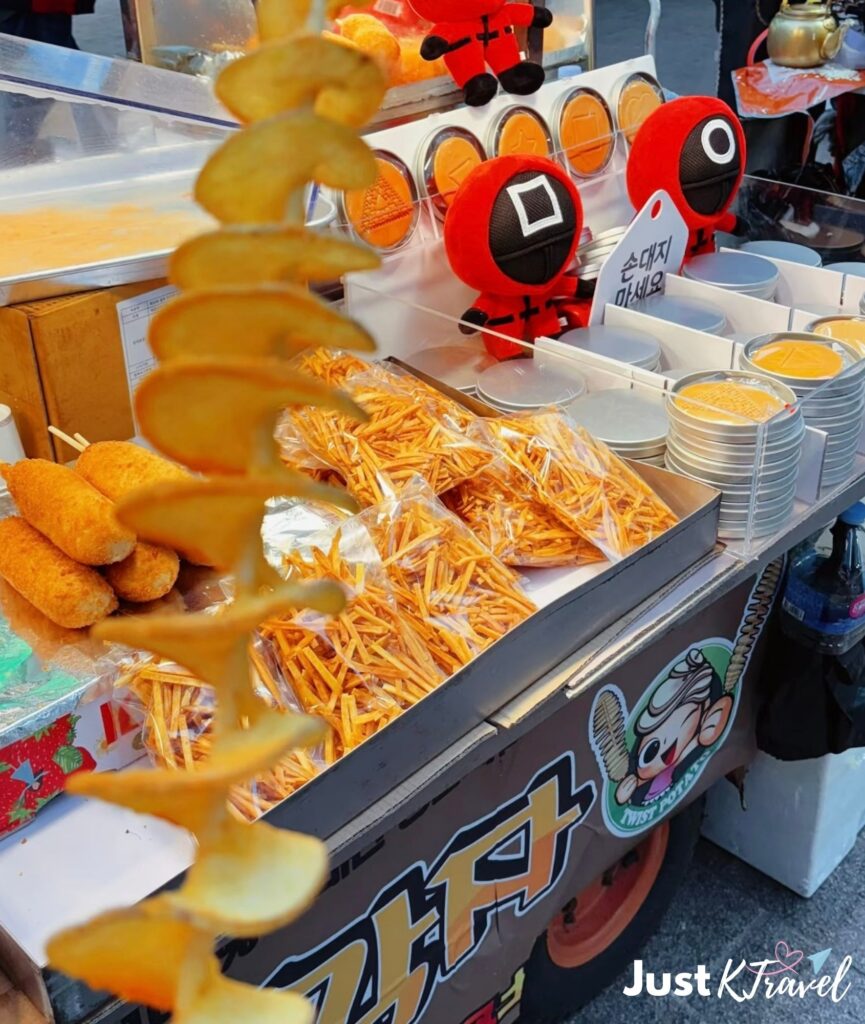
10. Tornado Potato
Type: Spiral fried potato
Taste: Salty
A whole potato cut into a spiral and deep-fried on a stick.
✔ Best for:
Street food photos
Kids
🍴 Why travelers love it
✔ Unique and Instagram-worthy street food
✔ Crispy texture with soft inside
✔ Easy to eat on the go
✔ Popular with families and kids
💡 Travel Observation
I often saw tornado potato being sold at Myeongdong Street Food Market, especially in the evening when the area becomes busy with tourists and food stalls.
It is one of the most common snacks you’ll notice while walking through the street food alleys.
💰 Price range
₩4,000 – ₩5,000 per stick
📍 Where to eat Tornado Potato
Seoul: Myeongdong, Hongdae Street Food Stalls
Busan: BIFF Square, Haeundae Market
Jeju: Dongmun Traditional Market
💡 If you’re planning to explore Myeongdong street food at night, staying nearby makes it much easier to enjoy the area without worrying about late-night transport.
👉 Compare hotels in Myeongdong (Seoul) – Best stays for first-time visitor
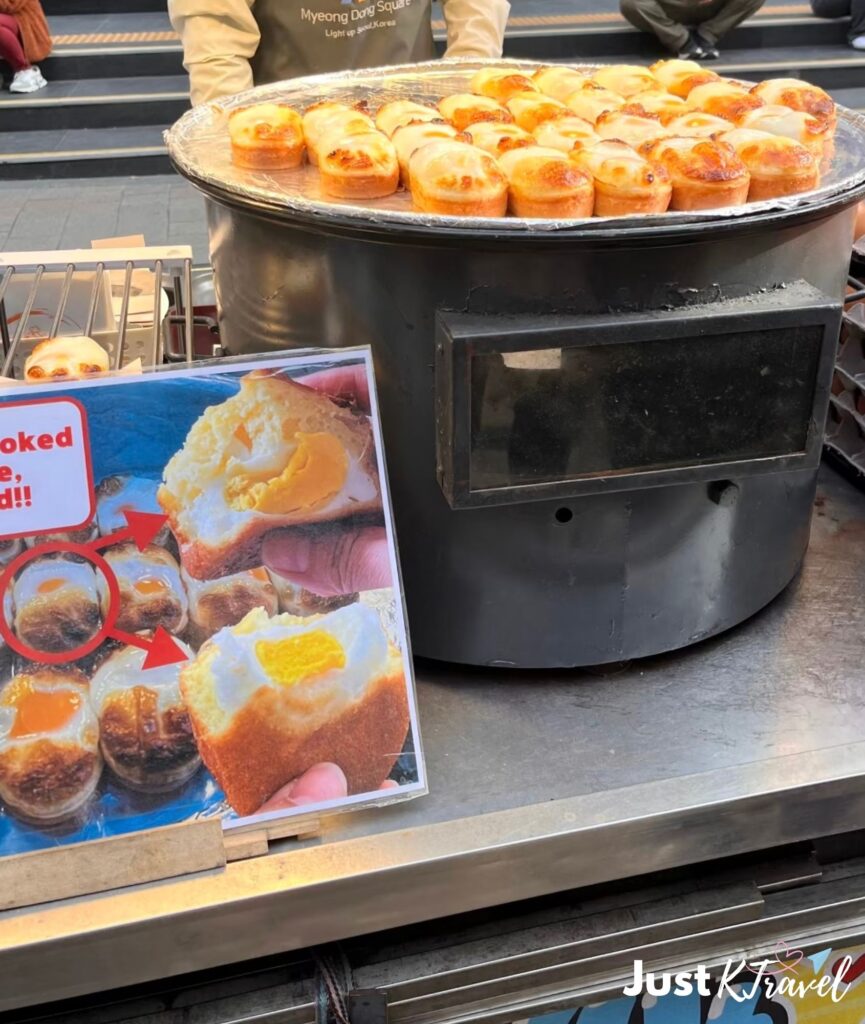
🍞 11. Egg Bread (계란빵)
Type: Sweet-savory Korean street bread
Taste: Lightly sweet with soft baked egg inside
Egg bread (gyeranppang) is a popular Korean street snack made with a soft, slightly sweet cake-like batter baked with a whole egg inside. It is warm, filling, and commonly found near subway stations and busy street food areas.
It’s especially popular during colder months and is often enjoyed as a quick breakfast or light snack.
🍴 Why travelers love it
✔ Warm and freshly baked on the spot
✔ Light but filling snack option
✔ Perfect for breakfast or quick bites
✔ Affordable and widely available
💡 My Personal Experience
This is actually one of my personal favorites. I often eat egg bread as a quick snack while walking around Korea because it’s simple, warm, and satisfying without being too heavy.
💰 Price range
₩2,000 – ₩3,000 per piece
📍 Where to eat Egg Bread
Seoul: Myeongdong, Hongdae, Subway station exits
Busan: Seomyeon, Haeundae area
Jeju: Dongmun Market
🍢 Korean street food is not just about eating—it’s also part of experiencing local culture in South Korea. From night markets to traditional food stalls, many of these snacks are connected to unique cultural moments you can only experience while traveling.
If you want to explore more authentic local activities beyond food and shopping, Korea offers many hands-on cultural experiences, street performances, and traditional activities worth trying.
👉 Things to Do in South Korea Besides Shopping: Unique Korean Experiences You Shouldn’t Miss
📊 Sweet vs Savory Street Food
Food | Sweet | Savory |
Tteokbokki | ⭐⭐ | ⭐⭐⭐ |
Hotteok | ⭐⭐⭐⭐ | |
Corn Dog | ⭐⭐ | ⭐⭐ |
Eomuk | ⭐⭐⭐ | |
Gimbap | ⭐⭐⭐ | |
Bungeoppang | ⭐⭐⭐ | |
Dakkochi | ⭐⭐ | ⭐⭐⭐ |
Twigim | ⭐⭐⭐ |
📍 Best Street Food Areas in Korea (Seoul, Busan & Jeju)
These are the most popular street food markets in Korea, where you can try everything from tteokbokki to hotteok and Korean fried snacks.
🇰🇷 Seoul
🍢 Gwangjang Market – Famous traditional market with authentic Korean street food
👉 Stay near Gwangjang Market (Seoul hotels)
🌶️ Myeongdong Street Food Alley – Tourist-friendly night food street with endless snack stalls
👉 Best hotels in Myeongdong (Seoul)
🍜 Namdaemun Market – Local market with affordable street food and snacks
👉 Stay near Namdaemun Market (Seoul hotels)
🌊 Busan
🍢 BIFF Square – Movie street + popular street food stalls
👉 Stay near BIFF Square (Nampo-dong hotels)
🐟 Jagalchi Market – Korea’s largest seafood market with fresh local food
🏖️ Haeundae Traditional Market – Close to beach + street food + nightlife
🌴 Jeju
🍊 Dongmun Traditional Market – Most popular Jeju night market for street food
🌊 Seogwipo Maeil Olle Market – Local food market in southern Jeju
💡 Pro Tips for Street Food in Korea
✔ Bring cash (some small stalls don’t accept cards)
✔ Follow local queues (best food = busiest stalls)
✔ Avoid empty stalls (low turnover = less fresh food)
✔ Try small portions so you can taste more dishes
🏨 Travel Tip
Staying near major street food markets can save a lot of travel time and make it easier to explore Korea’s night food culture without worrying about transport.
👉 🏨 Find the best hotels in Korea for your trip (Seoul, Busan & Jeju)
❓ Frequently Asked Questions About Korean Street Food (2026 Guide)
💰 Is Korean street food expensive?
No — Korean street food is one of the most affordable food options in Korea.
Most items cost:
👉 ₩1,000 – ₩5,000 ($0.80 – $3.80)
You can easily eat multiple dishes in one visit without spending much, which is why street food markets are popular among budget travelers.
🌶️ Is Korean street food spicy?
It depends on the dish.
Some foods like tteokbokki and spicy dakkochi can be quite hot, especially for first-time visitors. However, many street foods are mild or sweet, such as:
✔ Hotteok (sweet pancake)
✔ Gimbap (rice rolls)
✔ Egg bread (gyeranppang)
✔ Tornado potato
💡 Tip: If you’re unsure, start with mild dishes first and gradually try spicier options.
🧼 Is Korean street food safe?
Yes — Korean street food is generally very safe, especially in busy and well-known markets.
It is recommended to choose stalls that:
✔ Have a steady flow of customers
✔ Cook food fresh in front of you
✔ Operate in popular markets like Myeongdong, Gwangjang, or BIFF Square
💡 High turnover means fresher ingredients and better food quality.
🍽️ What is the best time to try Korean street food?
Most street food markets are best visited:
✔ Afternoon (after 3 PM)
✔ Evening (6 PM – 10 PM) for full street food atmosphere
Night markets are especially popular because of the lively atmosphere and variety of food stalls.
💳 Do Korean street food stalls accept card payments?
Some larger stalls accept cards, but many smaller vendors still prefer cash.
💡 It’s best to carry a small amount of cash (₩10,000–₩30,000) when visiting traditional markets.
👉 💳 Cash vs Card in Korea: What Most Travelers Actually Use (2026 Guide)
🔗 Related Korea Travel Guides
🎁 Bonus: Free & Premium Itineraries
✨ Final Thoughts
Korean street food isn’t just about eating — it’s part of the travel experience.
👉 If it’s your first time:
Start with safe options like hotteok, corn dog, and gimbap, then explore more adventurous dishes.
Planning a trip to South Korea? Subscribe to the JustKTravel newsletter for the latest travel guides, seasonal festivals, cherry blossom updates, transportation tips, and new blog posts about exploring Korea.
Get helpful travel tips and updates delivered straight to your inbox so you can plan your Korea trip with confidence. ✈️
[mc4wp_form id=”2761″]
Disclosure: This post contains affiliate links to experiences I personally use and trust. If you book through them, I may earn a small commission at no extra cost to you.
👤 About the Author
Hi, I’m Richelle, the creator of Just KTravel, currently based in South Korea.
Before moving to Korea, I visited the country several times as a traveler. Today, I share practical Korea travel guides, seasonal updates, transportation tips, and destination recommendations to help visitors plan their trips more easily and confidently.
My goal is to make Korea travel simpler — especially for first-time visitors who may feel overwhelmed by transportation, planning, or language barriers.
Whether you’re visiting Korea for the first time or returning for another trip, I hope these guides help you travel with less stress and better planning.
💬 Need Help Planning Your Korea Trip?
Have questions about visiting Korea or planning your itinerary?
Join our Korea Travel Facebook Group, where travelers share real experiences, ask questions, and exchange tips about transportation, accommodation, itineraries, and seasonal travel in South Korea.