
❄️ Best Places to See Snow in Korea: When & Where to Go
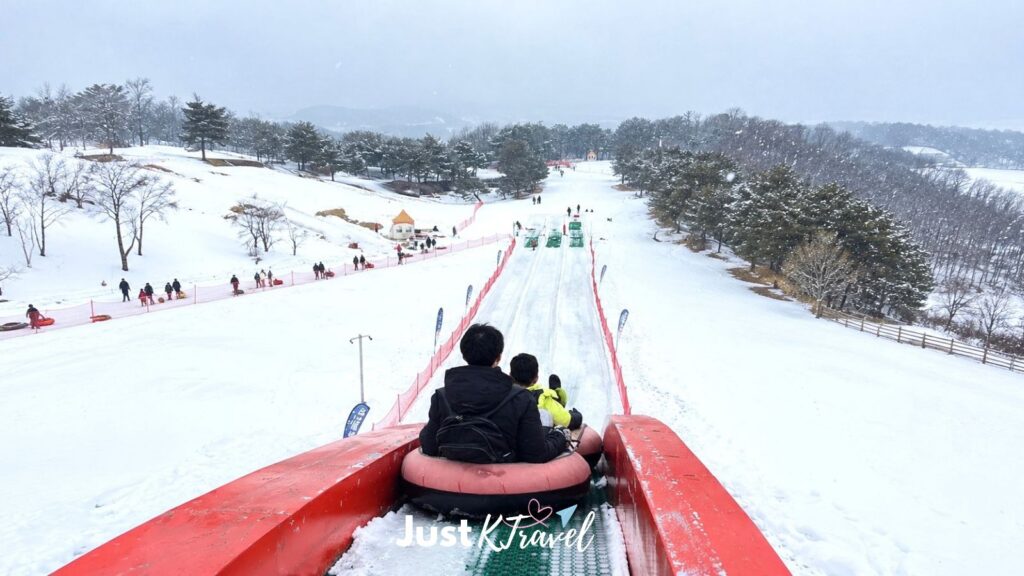
By Richelle (JustKTravel) • Updated Oct 2026
Table of Contents
ToggleSeeing a Korean palace covered in snow or walking through a quiet mountain landscape in winter is a lovely experience. But if you’re planning a trip to South Korea specifically to see snow, there’s one thing to know: snowfall is unpredictable, especially in Seoul.
Even if it doesn’t snow during your trip, you can still enjoy winter in Korea, from visiting traditional neighborhoods and ski resorts to trying seasonal street food and exploring mountain scenery. Ski resorts may also use artificial snow on their slopes, so you can still enjoy skiing when natural snowfall is limited.
Since I live in South Korea, my advice is to plan around what you want to do, not just whether it might snow. That way, you’ll still have a good trip if the weather doesn’t go as hoped.
This guide covers the best places to see snow in Korea, when to visit, where to stay and how to plan a winter trip.
❄️ Quick Answer: Where Is the Best Place to See Snow in Korea?
Destination | Best For | How Long to Stay |
Skiing and mountain scenery | Overnight or multi-day | |
Snowy landscapes and photography | Day trip or overnight | |
Frozen waterfall scenery | Day trip | |
Skiing near Seoul | Day trip or overnight | |
Families and resort activities | Day trip or overnight | |
Mountain scenery and winter festivals | Overnight | |
Dramatic mountain views | Day trip or overnight | |
Forests, temples and nature | Day trip or overnight | |
Mountain scenery outside Gangwon-do | Regional trip | |
City sightseeing and possible snowfall | City stay |
If seeing snow is the main reason for your trip, I’d look at mountain destinations first, especially Pyeongchang and Daegwallyeong. For a first trip to Korea, staying in Seoul and taking a day trip is easier if you also want to explore the city.
Always check recent weather and attraction updates before travelling.
🏔️ 1. Pyeongchang: Best Overall for a Snow-Focused Trip
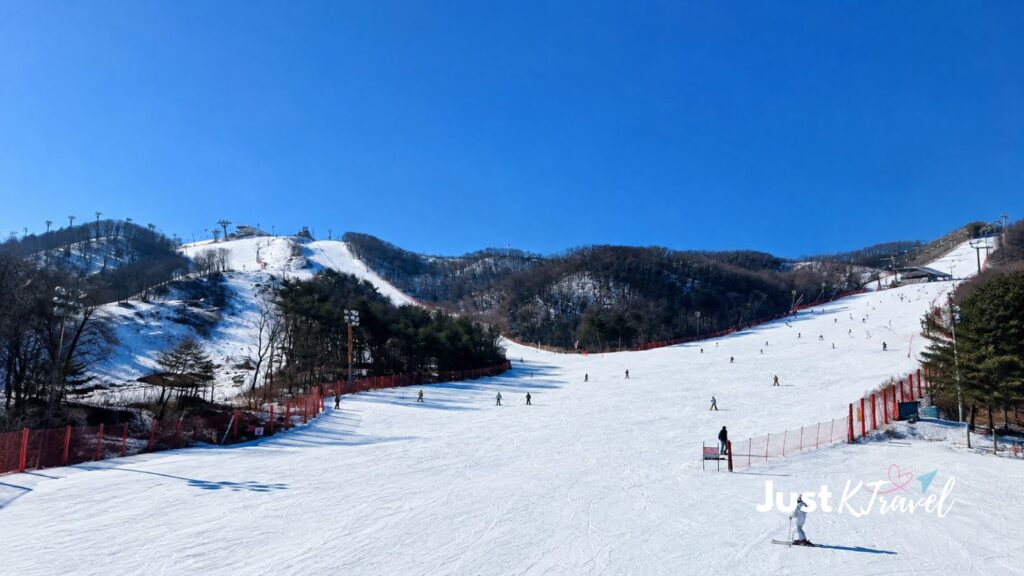
If I were planning a trip mainly for snow and skiing, Pyeongchang would be high on my list. This mountain region in Gangwon-do has several well-known ski resorts and plenty of winter scenery.
Popular options include:
MONA YongPyong: Skiing and mountain views, including the Balwangsan Cable Car when operating.
Alpensia: A resort-style setting for skiing and accommodation.
Phoenix Snow Park: A destination to research for skiing and seasonal winter facilities.
You don’t need to ski to enjoy a mountain trip. Depending on the resort and season, you may be able to enjoy elevated views and other winter activities.
Should you stay overnight? If you’re planning several activities or more than one day on the slopes, staying nearby can save travel time. Check the hotel’s distance from your chosen resort before booking. Compare accommodation through Agoda and explore Klook’s Korea activities for available ski packages, lessons and transport options. Check whether equipment rental, lift access and lessons are included.
For more options, read Best Ski Resorts in Korea for Beginners: Easy Trips from Seoul & Busan.
🌨️ 2. Daegwallyeong: Best for Snowy Landscapes and Photography
Daegwallyeong is known for its open fields and rolling hills, which can look especially beautiful after fresh snowfall. It’s a lovely area to consider for winter photography, but check recent conditions before travelling.
You can also investigate the Daegwallyeong Snow Festival when it takes place. Dates and activities vary each year.
If you’d like to visit several attractions, consider the Daegwallyeong Sky Ranch, Samyang Ranch and Balwangsan Cable Car tour. Check the itinerary, meeting point and admission inclusions before booking.
A day trip is possible, but an organised excursion may be more convenient if you want to visit multiple attractions without arranging each transfer yourself.
🏔️ 3. Gangwon-do: A Region for Winter Activities
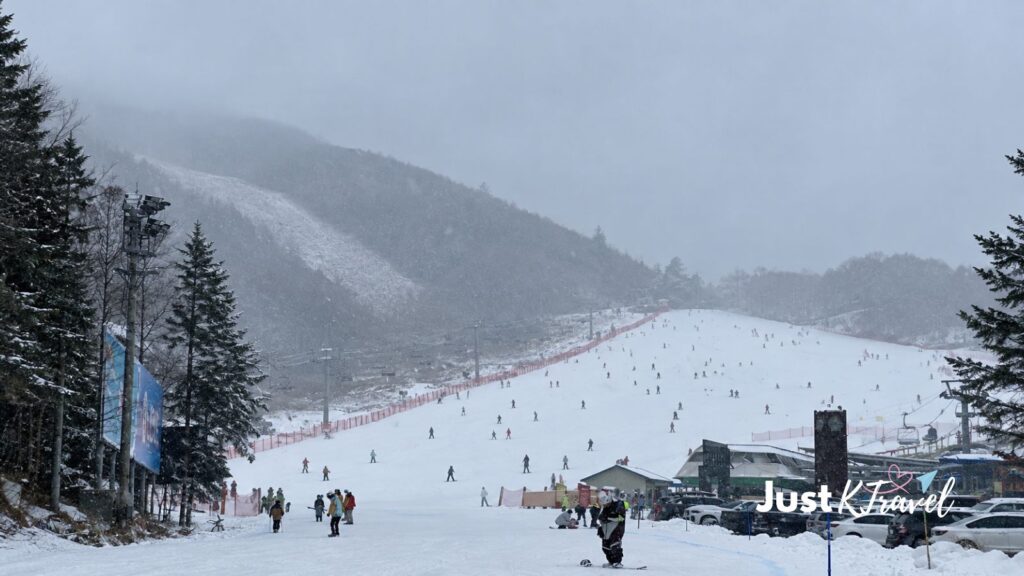
Gangwon-do covers a large area, so don’t treat it as one easy day-trip destination. Decide whether you want to ski, explore mountain scenery or visit the coast first, then choose a town that fits your plans.
Consider these locations:
- Pyeongchang: Ski resorts and mountain scenery.
- Hongcheon: Resort facilities and winter activities.
- Chuncheon: An option for trips from the Seoul metropolitan area.
- Taebaek: Mountain landscapes and seasonal events.
- Sokcho: A convenient base to explore Seoraksan.
- Jeongseon: Mountain scenery and outdoor activities.
Check transport connections, shuttle services and return schedules before deciding where to stay.
For a wider seasonal overview, read Korea in Winter: Complete Travel Guide — Weather, Snow, What to Wear & Things to Do.
🧊 4. Eobi Ice Valley: Best for Frozen Waterfall Scenery
Eobi Ice Valley, also called Eobigyegok Valley (어비계곡), is known for its winter ice formations and frozen waterfall scenery.
Unlike a ski resort, the main attraction is the ice itself. Its appearance depends on temperatures and recent weather, so photographs from previous winters may not reflect current conditions.
Before visiting:
- Check recent photographs and local updates.
- Confirm access and transport arrangements.
- Wear shoes with good grip.
- Stay away from unstable ice and avoid climbing on frozen formations.
Want to visit Eobi Ice Valley without arranging transport yourself? A guided day tour from Seoul can make the trip easier, especially if you want to combine the valley with other winter attractions.
- Eobi Ice Valley & Nami Island Winter Day Tour — an option to consider for a winter day trip from Seoul.
- Eobi Ice Valley, Strawberry Picking & Gangwon-do Bus Tour — worth checking if you’d like to combine the visit with seasonal activities.
Check each tour’s itinerary, departure point, available dates and inclusions before booking, as routes and seasonal activities can change.
For more seasonal excursions, see Best Winter Day Trips from Seoul: Snow, Ice, Ski Resorts & Winter Festivals.
🎿 5. Elysian Gangchon: A Ski Trip from Seoul
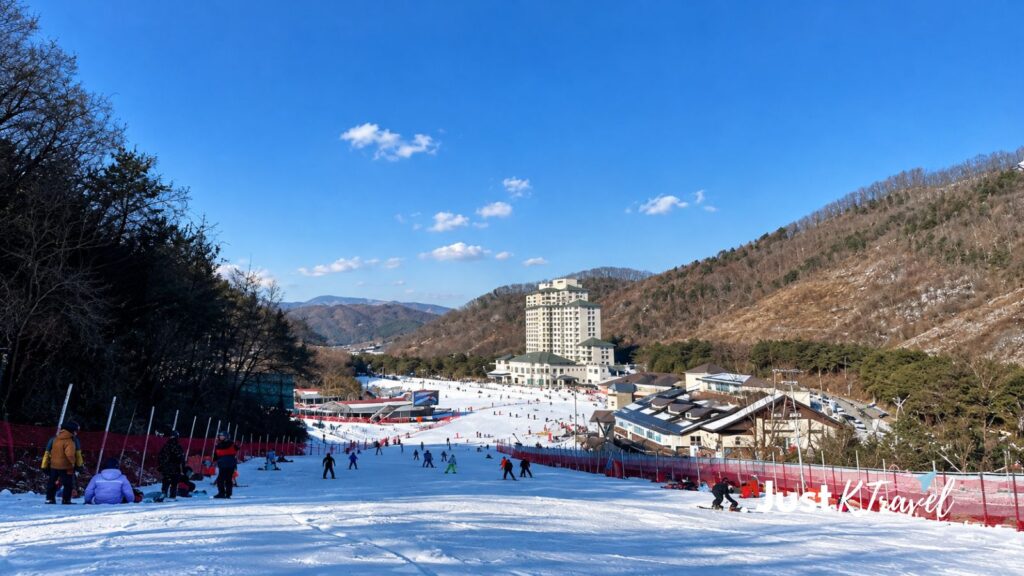
If you’re staying in Seoul and want to try skiing without changing hotels, Elysian Gangchon in Chuncheon is worth considering. Before booking, check the resort’s opening dates and transport options. Beginners should look for packages that include a lesson, equipment rental and lift access.
Keep in mind that artificial snow may be used on the slopes, so skiing doesn’t necessarily mean you’ll see naturally snow-covered scenery.
If you’d prefer to arrange transport and skiing together, take a look at the Elysian Gangchon Ski Tour from Seoul (5 pick-up points). Check the itinerary, available dates and what’s included before booking, especially if you need ski lessons or equipment rental.
🎿 6. Vivaldi Park: A Family-Friendly Resort
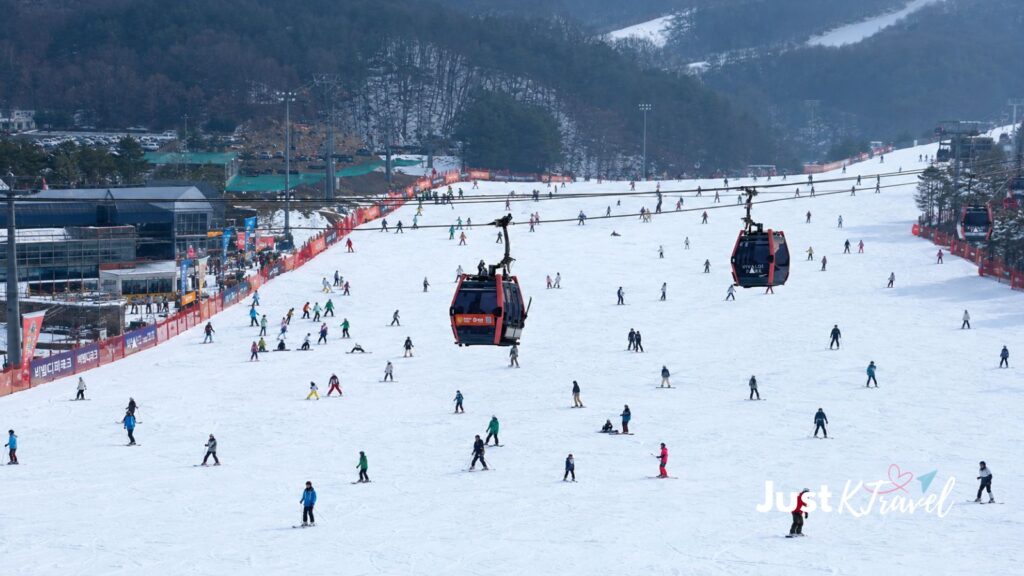
Vivaldi Park in Hongcheon is worth considering if you’re travelling with family and want skiing and other resort facilities in one place.
Before booking, compare day trips with overnight stays and check which activities are operating during your dates. Beginners should confirm whether lessons and equipment rental are included in the package price.
If you’re planning a day trip from Seoul, there are a couple of tour options to consider, depending on what you’d like to do:
- Vivaldi Park Ski Resort & Eobi Ice Valley Day Tour from Seoul — worth checking if you’d like to combine skiing with a visit to Eobi Ice Valley.
- Vivaldi Ski One Day Tour with Snowy Land Snow Sled Ticket — an option for families interested in snow sledding at Snowy Land.
Check each package’s itinerary, operating dates, transport arrangements and inclusions before booking. Skiing, snow sledding and other activities may have separate tickets or age and height requirements.
🏔️ 7. Taebaek: Mountain Scenery and Winter Festivals
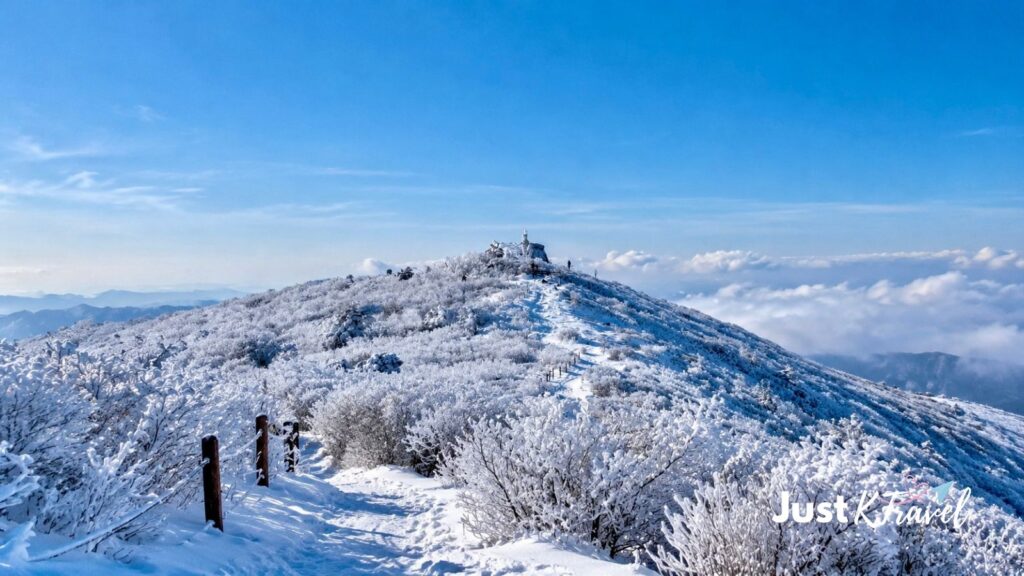
Taebaek is known for its mountain scenery and has hosted the Taebaeksan Snow Festival. It’s worth considering if you’d like to combine a mountain trip with seasonal activities.
Check current announcements before planning around the festival, as dates and programmes can change from year to year. Transport may take longer than travelling to resorts closer to Seoul, so consider an overnight stay if you want to explore at a relaxed pace.
🇰🇷 Want a Private Tour with a Local Tour Guide?
If you’d prefer to explore Korea with a local tour guide, you can message me through my Facebook profile for local tour guide recommendations.
A private tour can make things easier if you’re travelling with family, want to visit several places in one day or would rather not worry about connecting buses and trains.
🏔️ 8. Seoraksan: Dramatic Winter Mountain Views
Seoraksan National Park has rugged peaks that look especially striking when covered in snow. If you’re staying in Sokcho, you can use the town as a base for exploring the surrounding area.
You don’t necessarily need to attempt a challenging hike to enjoy the scenery. Look into accessible viewpoints and attractions that are open during your visit.
Before visiting, check park notices, trail closures and weather conditions. Snow and ice can make mountain paths dangerous, especially for inexperienced winter hikers.
If you’d prefer to visit from Seoul without arranging transport yourself, consider the Seoraksan National Park & Sinheungsa Temple Day Tour. Check the itinerary, travel time and available dates to make sure the tour suits your plans.
🇰🇷 Prefer Exploring Korea with a Local Guide?
If you’d like to explore Korea with a local guide, feel free to message me through my Facebook profile for local tour guide recommendations.
A private tour can be a good option if you’re travelling with family, want to visit several places in one day, or prefer a more flexible itinerary without worrying about public transport connections.
🌲 9. Odaesan: Forests, Temples and a Quieter Winter Trip
If you’d rather spend time among forest trails and temples than on busy ski slopes, Odaesan National Park is another mountain destination to consider.
When snow settles among the trees, the landscape can be especially peaceful. Depending on the weather and access conditions, you may be able to enjoy photography, temple visits and suitable winter walks.
Check local notices before entering the mountains, as some paths may be closed or slippery during winter.
If you’d like to combine a mountain forest visit with panoramic views, take a look at the Balwangsan Cable Car & Odaesan Forest Private Day Tour. Check the itinerary, departure arrangements and available dates before booking to make sure it fits your winter plans.
🇰🇷 Make Your Korea Trip More Personal
Looking for recommendations for places to explore with a local guide? You’re welcome to message me through my Facebook profile. I can share local tour guide recommendations to help you plan a trip that suits your interests.
This can be especially helpful if you want to visit several attractions in one day or prefer a more flexible schedule than a standard group tour.
🏔️ 10. Deogyusan: Mountain Scenery Outside Gangwon-do
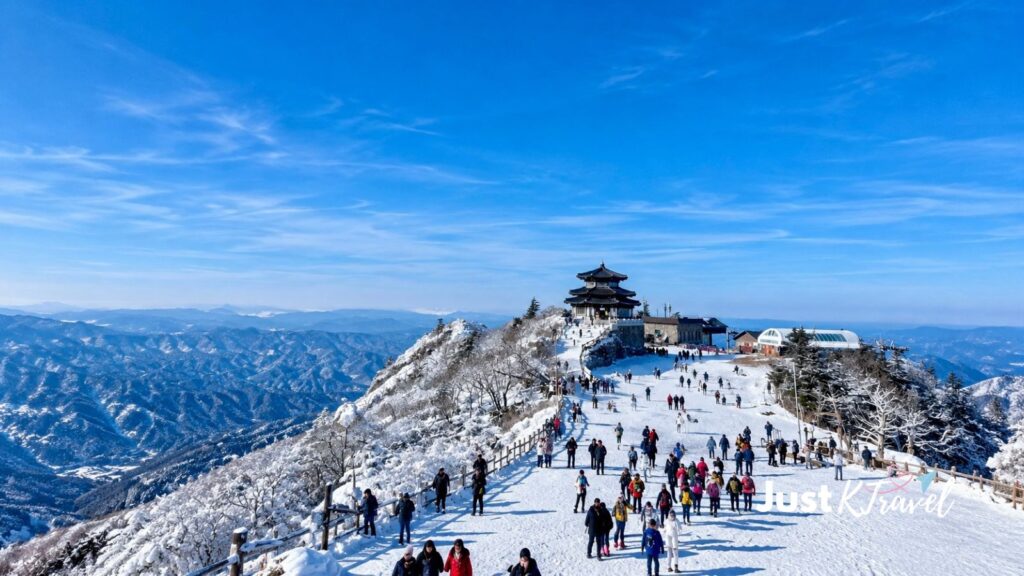
If you’re looking for snowy mountain scenery outside Gangwon-do, Deogyusan National Park in Jeonbuk (North Jeolla Province) is another destination to consider. Its mountain landscapes can be especially beautiful in winter, and nearby resort facilities may offer access to elevated views when operating. Before travelling, check weather conditions, trail access, gondola schedules and transport connections. Snow and ice can affect access, so plan carefully if you intend to hike.
Deogyusan is less convenient if you’re staying in Seoul for only a few days, so it makes more sense if your itinerary already includes this part of Korea.
Travelling from Busan? You can check the (Hotel Pick-up) Muju Deogyusan Ski & Snow Hiking Day Tour from Busan if you’re interested in a guided winter outing. Check the destination, itinerary, hotel pick-up arrangements and included activities before booking.
If you’re planning to take this winter day trip from Busan, choosing a convenient place to stay can make your plans easier. Check out my guide on Where to Stay in Busan to find an area that suits your trip.
🏙️ Can You See Snow in Seoul?
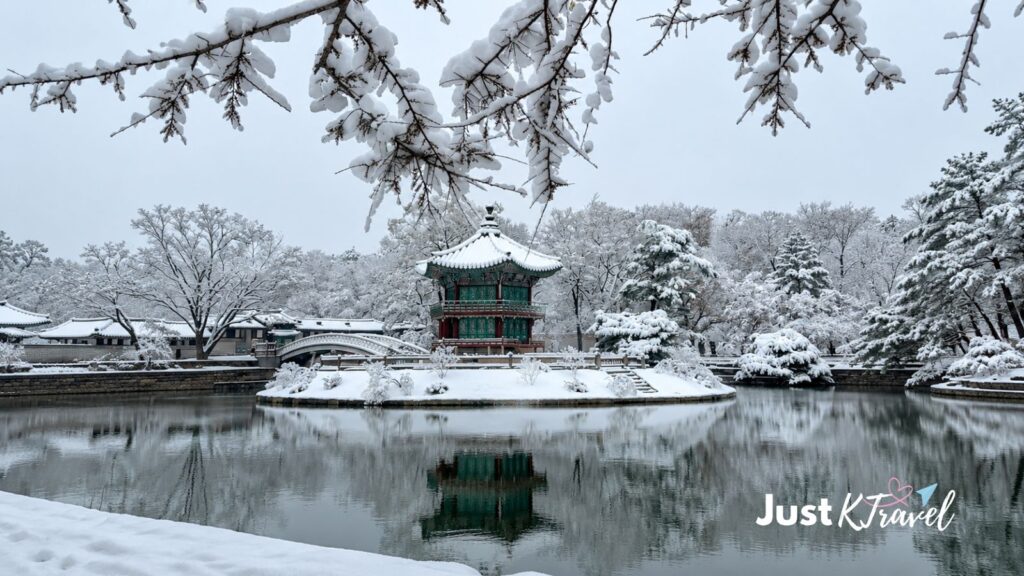
Yes, Seoul receives snowfall in winter, but the amount and how long it stays on the ground vary.
If you’re lucky enough to catch a snowfall in Seoul, these are some places I’d look at for winter photos:
Gyeongbokgung Palace: Traditional architecture and palace grounds.
Changdeokgung Palace: Historic buildings and landscaped grounds.
Bukchon Hanok Village: Traditional houses and narrow streets. Remember that this is a residential neighborhood.
Namsan and N Seoul Tower: City views when access and weather conditions are suitable.
Seoul Forest: A possible choice for a winter walk.
Han River parks: Open spaces that can feel particularly cold in winter.
Check weather forecasts and attraction notices before setting out. Wear shoes with good grip because melting snow can refreeze and create slippery patches.
Where Should You Stay in Seoul?
For a first visit, I’d choose a convenient neighborhood rather than booking a hotel based on the hope of seeing snow nearby.
Start with Best Areas to Stay in Seoul for First-Time Visitors. Solo travellers can also read Where to Stay in Seoul Alone: Best Budget Solo Accommodation Guide.
You can compare accommodation on Agoda, paying attention to subway access, nearby restaurants and airport transport.
If you’re arriving at Incheon Airport, use the Incheon Airport to Seoul transfer guide to compare your options.
📅 When Is the Best Time to See Snow in Korea?
Winter generally runs from December through February. Some higher mountain areas may retain snow into March, but conditions vary.
December: Early Winter
December is a nice time to enjoy Christmas lights, winter events and sightseeing in Seoul. Ski resorts also begin opening for the season, depending on the weather and their schedules.
For temperatures and clothing advice, read South Korea Weather in December: What to Wear, Snow & Winter Travel Tips.
January: A Good Choice for Winter Activities
January is a good month to plan a ski trip or explore Korea’s mountain areas. Pyeongchang and other parts of Gangwon-do are popular choices for winter sports.
Seoul may also receive snow, but don’t expect the streets to be covered throughout your visit.
February: Skiing and Winter Attractions
You can still enjoy skiing and winter attractions in February. Just check which facilities are open for your dates, and have a few indoor activities in mind in case the weather changes.
If you’re interested in winter festivals, check the current year’s dates and programmes before booking.
March: Can You Still See Snow?
Yes, you may still find snow in higher mountain areas in March, but don’t expect the same conditions everywhere. Seoul and other lower-lying areas are usually heading into spring by then. Check recent local conditions before travelling.
📊 Seoul vs Mountain Destinations
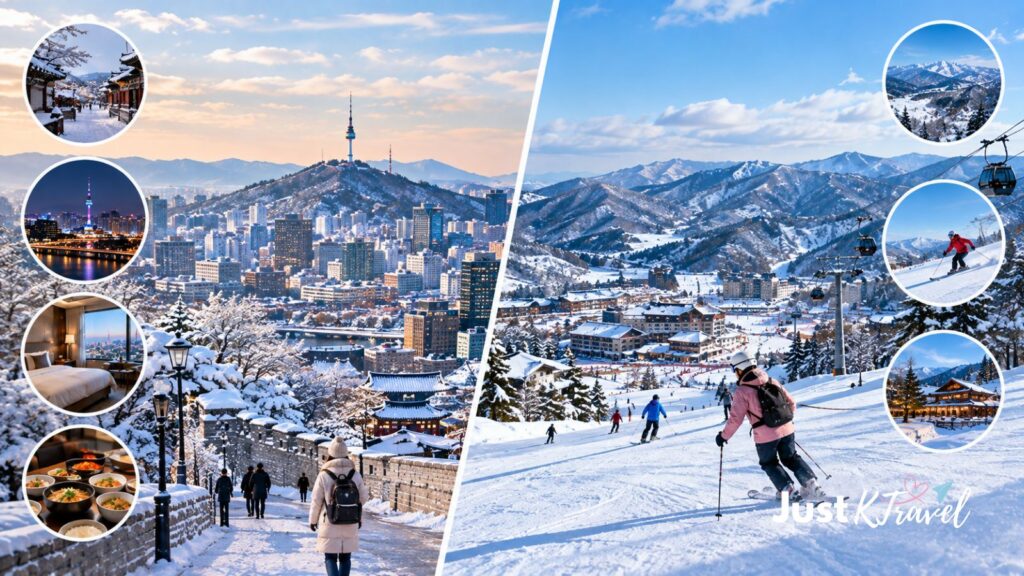
Factor | Seoul | Mountain Destinations |
Snowy scenery | Unpredictable | Often more promising at suitable elevations |
Natural snowfall | Possible, not guaranteed | Depends on location and weather |
Skiing | Limited to specific facilities | Established ski resorts available |
Accommodation | Wide range of hotels | Varies by town and resort |
Restaurants and indoor activities | Extensive choice | Varies by location |
Best for short trips | Convenient city base | Depends on travel time |
Best for a snow-focused holiday | Less reliable | Generally a stronger choice |
For a three- to five-day trip, I’d use Seoul as a base and add a day trip. If you have a week or more, spending a night or two in the mountains gives you more time to enjoy the area without rushing back to the city.
🚆 Day Trip or Overnight Stay: Which Is Better?
A day trip may suit you if Seoul is your main base and you only want to try one winter activity. Consider staying overnight if you plan to ski for several days, visit multiple mountain attractions or want to avoid a long return journey.
If you’d rather not coordinate transport between several attractions yourself, a private tour may be worth considering. You can also message me through my Facebook profile for local tour guide recommendations. For a longer route, read 10-Day Korea Winter Itinerary: Seoul, Busan & Snowy Day Trips.
🏨 Where Should You Stay for a Snow Trip in Korea?
Your best base depends on your plans.
Seoul: Best for first-time visitors who want city sightseeing and a possible winter day trip.
Pyeongchang: Suitable for skiing and mountain scenery, especially if you’re staying at a resort for several days.
Sokcho: Worth considering for access to Seoraksan and the surrounding area.
Busan: A good addition to a longer trip if you want coastal scenery, markets and local food.
Jeju: Better suited to a varied winter holiday than a trip focused entirely on snow. Hallasan can experience snowy conditions, but access depends on the weather.
Explore these accommodation guides before booking:
🎿 What Can You Do Besides Looking at Snow?
A winter trip is easier to enjoy when your plans don’t depend entirely on the weather.
Depending on the destination and operating schedule, you could:
Try skiing or snowboarding.
Go sledding at a suitable seasonal attraction.
Visit a winter festival.
Explore a mountain cable car when operating.
Visit traditional markets and enjoy Korean winter food.
Spend time in cafés, museums and indoor attractions.
Experience a Korean-style sauna, or jjimjilbang.
Browse Klook’s Korea activities for available winter experiences, and check meeting points, transport, inclusions and cancellation conditions before booking.
For more ideas, read Things to Do in South Korea Besides Shopping: Unique Korean Experiences You Shouldn’t Miss.
📸 Practical Tips for Seeing Snow in Korea
A few things are worth sorting out before you head out into the Korean winter.
- Check the local forecast: Mountain weather can differ considerably from Seoul’s conditions.
- Look for recent updates: Check local photos and attraction notices before visiting places such as Eobi Ice Valley.
- Have a backup plan: Museums, cafés and markets are good alternatives if outdoor conditions aren’t suitable.
- Start early after snowfall: Fresh snow may melt or become marked by foot traffic as the day progresses.
- Wear shoes with good grip: Snow and ice can make paths slippery.
- Dress for the destination: Mountain areas can be colder and windier than central Seoul.
- Leave room in your schedule: Allow time for warm meals, indoor breaks and unexpected transport delays.
- Check opening times and transport: Resort facilities, cable cars and festivals may operate on different schedules each year.
- Stay safe outdoors: Follow trail closures and never climb on frozen waterfalls or unstable ice.
For help getting around Seoul, see Seoul Subway vs Bus: Which Is Better for First-Time Visitors? and T-money Card vs Climate Card Seoul: Which Transportation Card Should You Buy?.
🧤 What Should You Wear to See Snow in Korea?
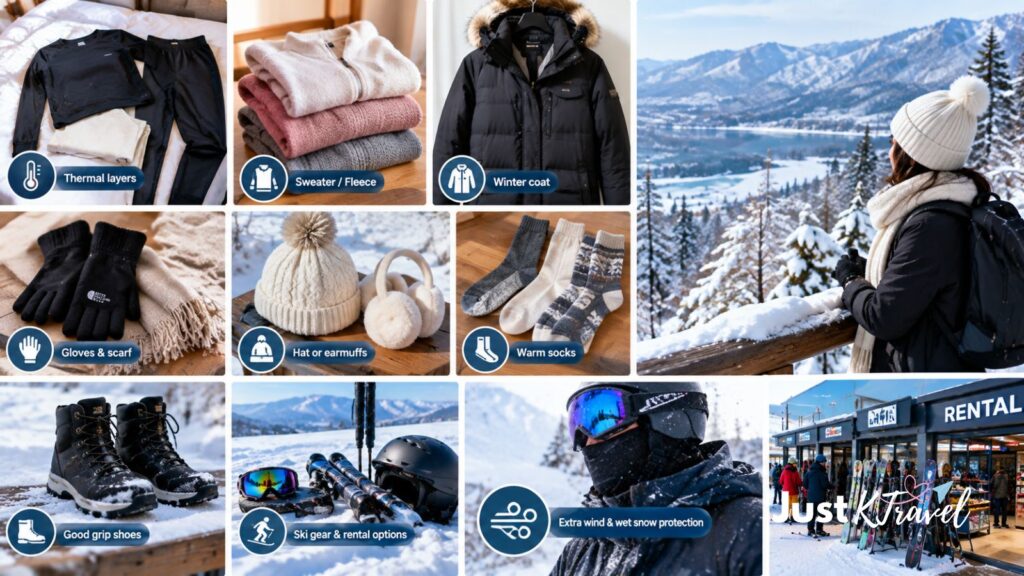
If you’re coming from a warmer climate, make sure you pack enough layers for Korea’s winter weather.
For typical winter sightseeing, bring:
Mountain areas may require extra protection against wind and wet snow. If you’re skiing, check what specialist clothing and equipment you need and whether rental options are available.
Read What to Wear in Korea in Winter: December–February + Packing List for more advice.
You can also use the Korea Winter Packing Checklist to organise your essentials.
🛡️ Do You Need Travel Insurance for a Winter Trip to Korea?
Planning to ski or snowboard in Korea? Check your travel insurance before your trip, as some standard policies don’t cover winter sports.
Before buying a policy, look at three things:
- Winter sports coverage: Standard policies may exclude skiing or require an additional winter sports option.
- Medical expenses and emergency assistance: Check coverage limits and whether emergency transportation or evacuation is included.
- Accidental injury and exclusions: Confirm the conditions that apply to recreational skiing, lessons and designated slopes.
Don’t assume that a standard travel policy automatically covers winter sports. Read the policy carefully and choose coverage that suits your itinerary.
You can compare travel insurance options here. Check the policy wording and exclusions before purchasing.
🌨️ What If It Doesn't Snow During Your Trip?
Even if it doesn’t snow, winter is still a good time to explore Korea. You can spend your days visiting palaces, browsing markets, trying seasonal food or warming up in a cosy café. If snow is still a priority, check mountain conditions during your stay and see whether a day trip is practical. For more seasonal ideas, read Korea in Winter: Complete Travel Guide.
🌊 Should You Add Busan After a Snow Trip?
One possible route is Seoul → Pyeongchang → Busan. You’ll have time to explore the capital, experience mountain scenery and finish with coastal walks, markets and seafood. Allow enough time for each transfer instead of squeezing too many destinations into a short holiday.
Use the Incheon Airport to Busan transportation guide to compare travel options and read Best Areas to Stay in Busan for First-Time Visitors when choosing accommodation.
🍊 What About Jeju in Winter?
Jeju is worth considering if you’re interested in coastal scenery, cafés, nature and local food.
However, I wouldn’t choose the island specifically for guaranteed snow. Hallasan can experience snowy conditions, while coastal areas may have very different weather.
Check mountain access and official hiking notices before travelling.
For accommodation advice, see Best Areas to Stay in Jeju for First-Time Visitors.
💰 Is a Snow Trip in Korea Expensive?
A snow trip can be fairly affordable or surprisingly expensive, depending on where you stay and whether you plan to ski.
Staying in Seoul and taking one winter day trip may cost less than spending several nights at a mountain resort. Skiing can add expenses such as:
Lift tickets.
Equipment rental.
Lessons.
Winter clothing.
Transport and accommodation.
Meals and drinks.
Compare the full package price rather than the advertised starting price. Check whether transfers, equipment, lift access and lessons are included.
You can compare winter activities on Klook and accommodation on Agoda.
For help planning your spending, read How Much Money to Bring to Korea and Is Seoul Expensive? Real Travel Costs.
🗺️ Which Snow Destination Should You Choose?
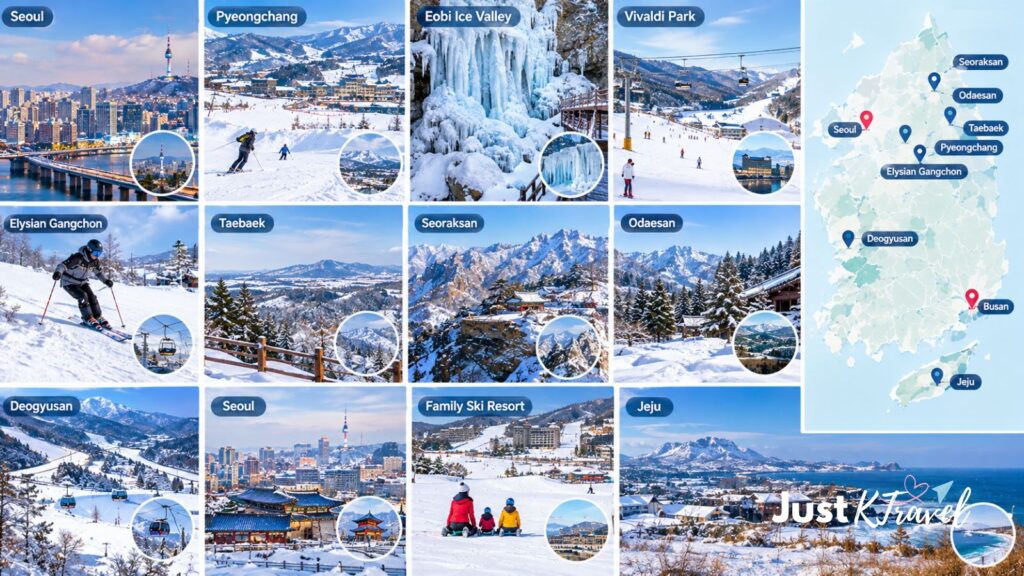
If You Want… | Consider… | Why |
A first winter experience near Seoul | Seoul plus a day trip | Convenient for a short holiday |
Mountain scenery | Highland landscapes | |
Frozen waterfall scenery | Ice formations when conditions are suitable | |
Skiing and resort facilities | Winter sports and resort activities | |
A ski trip from the Seoul area | Worth considering for a day trip | |
A family winter holiday | Several activities in one place | |
Mountain scenery and winter events | Seasonal attractions | |
Dramatic mountain views | Mountain landscapes when conditions allow | |
Forests and nature | A quieter outdoor experience | |
Mountain scenery outside Gangwon-do | An alternative for a regional itinerary | |
City sightseeing and a chance of snow | Plenty to enjoy even without snowfall |
These recommendations describe the type of experience each place offers, not current snow conditions. Check local updates before travelling.
🧳 How I'd Plan a Korea Snow Trip by Length
Three to Four Days: Stay in Seoul
Explore Seoul and choose one winter excursion that matches your interests. This avoids spending too much of your holiday travelling between hotels.
If it’s your first visit, start with First Time in South Korea? Complete Beginner Travel Guide.
Five to Seven Days: Seoul Plus a Winter Destination
Explore Seoul first, then consider spending a night or two near a mountain destination. Alternatively, combine Seoul with Busan if you want coastal scenery as well as winter activities.
Before departure, check Korea Entry Requirements and the Korea Travel Checklist.
For mobile data options, read Best SIM Card, eSIM or Pocket WiFi for Korea?.
Eight to Ten Days: Seoul, the Mountains and Busan
With eight to ten days, you have time to explore Seoul, spend a night or two in the mountains and continue to Busan without trying to fit everything into a few days.
See 10-Day Korea Winter Itinerary: Seoul, Busan & Snowy Day Trips for a more detailed route. You can also explore the 8D7N Korea Winter Itinerary: Seoul & Busan if you prefer a shorter plan.
🇰🇷 More Korea Travel Guides
Planning a winter holiday involves more than choosing where to see snow. These guides can help you organise the rest of your trip.
Before your trip
Getting around
Where to stay
Food and everyday spending
More practical advice
❓ Frequently Asked Questions About Seeing Snow in Korea
Where is the best place to see snow in Korea?
Pyeongchang and other mountain areas of Gangwon-do are good places to start, especially if you want skiing and winter scenery. Daegwallyeong is another option for snowy landscape photography, although natural snowfall isn’t guaranteed.
What month is best for seeing snow in Korea?
January and February are good months to plan a winter trip, particularly to mountain areas. December can also work, and some higher elevations may still have snow in March.
Does it snow in Seoul?
Yes, but snowfall varies from year to year. You might see a beautiful snowy morning, or you might spend your entire trip in cold but clear weather.
Is Eobi Ice Valley a good place to see snow?
Eobi Ice Valley is better known for frozen waterfall scenery and ice formations. Its appearance depends on temperatures and recent weather, so check current conditions before visiting.
Can I visit a snowy destination from Seoul in one day?
Yes. Some ski resorts and winter attractions can be visited on a day trip from Seoul. Elysian Gangchon is one option, but check transport times and operating schedules before booking.
Is Pyeongchang worth visiting if I don’t ski?
Yes. Depending on the resort and season, you may enjoy mountain views, cable cars and other winter attractions without spending the day on the slopes.
Can I see snow in Korea in December?
It’s possible, particularly in mountain areas, but snowfall varies by location and year. Check recent conditions before travelling.
Is snow guaranteed in Korea in January?
No. January is a popular month for winter travel, but no destination can guarantee natural snowfall on your chosen dates.
Can I see snow in Korea in March?
Some higher mountain areas may retain snow into March, but lower elevations are usually moving towards spring. Check local conditions before travelling.
Is Seoul or Gangwon-do better for seeing snow?
Seoul is convenient for city sightseeing and a chance of snowfall. Gangwon-do is generally a stronger choice if mountain scenery, skiing and winter activities are your priorities.
Should I stay overnight for a snow trip?
An overnight stay is worth considering if you’re planning several days of skiing or visiting multiple mountain attractions. For a short holiday, Seoul plus a winter day trip may be more practical.
What should I wear to see snow in Korea?
Bring warm layers, a winter coat, gloves, a hat, warm socks and shoes with good grip. Mountain areas may be colder and windier than central Seoul.
What if it doesn’t snow during my Korea trip?
You can still enjoy Korea’s palaces, markets, cafés, museums and winter food. If seeing snow is important to you, check conditions in the mountains and see whether a day trip fits your schedule.
❄️ Final Thoughts: Where Would I Go to See Snow in Korea?
If I were planning a winter trip around snow, I’d start by deciding whether I wanted to ski, photograph mountain scenery or simply experience a snowy day in Korea.
- For a convenient first trip: Stay in Seoul and add a winter day trip.
- For mountain scenery: Start with Pyeongchang or Daegwallyeong.
- For skiing: Compare Elysian Gangchon, Vivaldi Park and the resorts in Pyeongchang.
- For frozen waterfall scenery: Consider Eobi Ice Valley after checking current conditions.
- For dramatic mountain views: Research Seoraksan, Taebaek, Odaesan or Deogyusan, taking winter access and safety into account.
If you have more time, I’d combine Seoul with a mountain destination and finish in Busan for a mix of city sightseeing, winter scenery and coastal views.
My biggest tip is not to plan your entire holiday around the hope of seeing snow. If it falls, enjoy it! If it doesn’t, you’ll still have palaces to explore, local food to try and plenty of places to discover. Check the weather before heading out, leave some room in your itinerary and enjoy Korea at your own pace.
👤 About the Author
Hi, I’m Richelle, the creator of Just KTravel, based in South Korea.
I share simple and practical Korea travel guides from my own experience — including seasonal spots, transport tips, hidden places, and easy itineraries.
I started this blog after visiting Korea as a traveler myself, and now I write to help others plan their trips with less stress and more confidence.
My goal is to make travel to Korea travel easier and more enjoyable for everyone, especially first-time visitors.
🎁 Get My FREE Korea Travel Itinerary
Planning your Korea trip?
Get my FREE Korea Travel Itinerary here:
💬 Need Help Planning Your Korea Trip?
Have questions about traveling in Korea or planning your itinerary?
Join our Korea Travel Facebook community where travelers share real experiences, tips, and advice on transportation, accommodation, and seasonal travel in South Korea.
Disclosure:
This post may contain affiliate links to services and experiences I recommend based on personal use. If you make a booking through them, I may earn a small commission at no extra cost to you. I really appreciate your support for Just KTravel.