
🇰🇷 T-money Card vs Climate Card Seoul: Which Transportation Card Should You Buy? (2026 Guide)
By Richelle (JustKTravel) • Updated July 2026
Table of Contents
ToggleOne of the first things I recommend preparing before arriving in South Korea is figuring out how you will use public transportation.
When I first started exploring Korea, I remember spending extra time buying single subway tickets and checking how much cash I needed for every ride. It wasn’t difficult, but having a transportation card completely changed the experience.
Now, whether I’m exploring Seoul neighborhoods, taking a weekend trip, or heading to another city, I always make sure my transportation is ready before I start my day.
If this is your first trip to Korea, there are a few things worth preparing before you arrive. From transportation and money to apps and everyday travel tips, my [First Time in South Korea? Complete Beginner Travel Guide (2026)] covers the basics every first-time visitor should know before landing.
For first-time visitors, there is one common question:
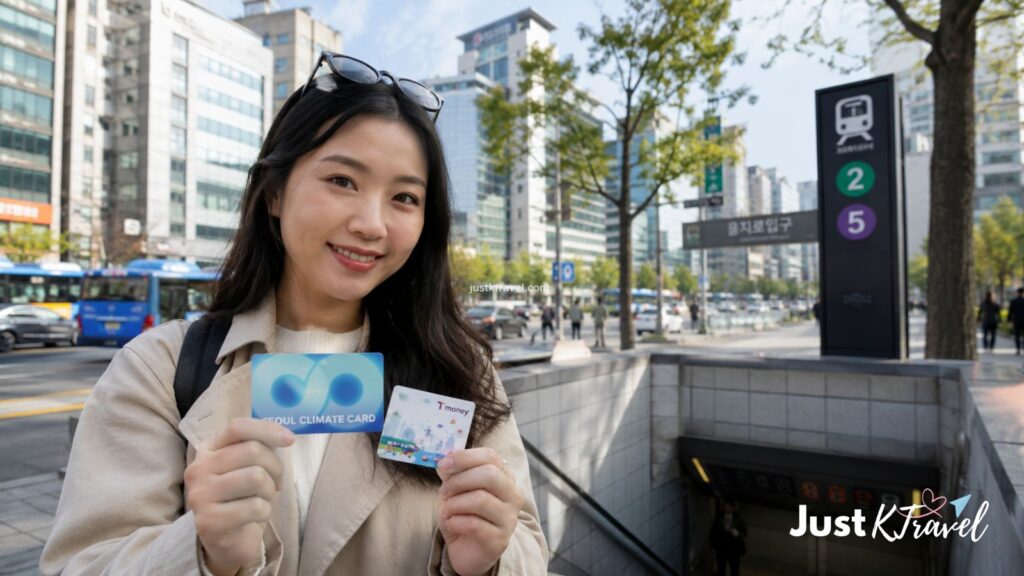
Should you buy a T-money Card or a Climate Card in Seoul?
Both are useful, but they are designed for different types of travelers. The best choice depends on your itinerary, how long you are staying, and whether you plan to explore only Seoul or travel around South Korea.
In this guide, I’ll explain the difference between the T-money Card and Climate Card, where to buy them, how they work, and which one I personally recommend based on different travel styles.
📝 About This Guide
I’ve lived in South Korea for years and regularly use public transportation when exploring Seoul and other cities.
This guide is based on my personal experience and focuses on:
✅ T-money Card vs Climate Card differences
✅ Which transportation card is better for tourists
✅ Where to buy and how to use each card
✅ My recommendations for solo travelers, couples, and families
Transportation policies, prices, and availability can change, so always check the latest information before your trip.
🚇 Why You Need a Transportation Card in Korea
South Korea has one of the easiest and most convenient public transportation systems I’ve experienced.
The subway is clean, affordable, and easy to use, while buses can take you almost anywhere in the city.
With a transportation card, you can simply tap when entering and leaving instead of buying individual tickets every time.
You can use transportation cards for:
✅ Seoul subway
✅ City buses
✅ Airport transportation
✅ Some taxis
✅ Convenience stores
For most visitors, buying a transportation card should be one of the first things you do after arriving in Korea.
If you are arriving at Incheon Airport, I recommend planning your first transportation step before your flight. Knowing whether you will take the AREX train, airport bus, taxi, or private transfer can make your arrival much smoother, especially if you land late, have heavy luggage, or are visiting Korea for the first time.
If you prefer a more convenient arrival, you can also book your airport transfer in advance through Klook. This can be especially helpful for first-time visitors, families, or travelers arriving late at night who want to go directly to their hotel without worrying about navigating public transportation after a long flight.
Before your trip, check my guide on [How to Get from Incheon Airport to Seoul (2026 Guide to Airport Transfer Options)] to compare the easiest ways to reach the city.
💳 What Is a T-money Card?
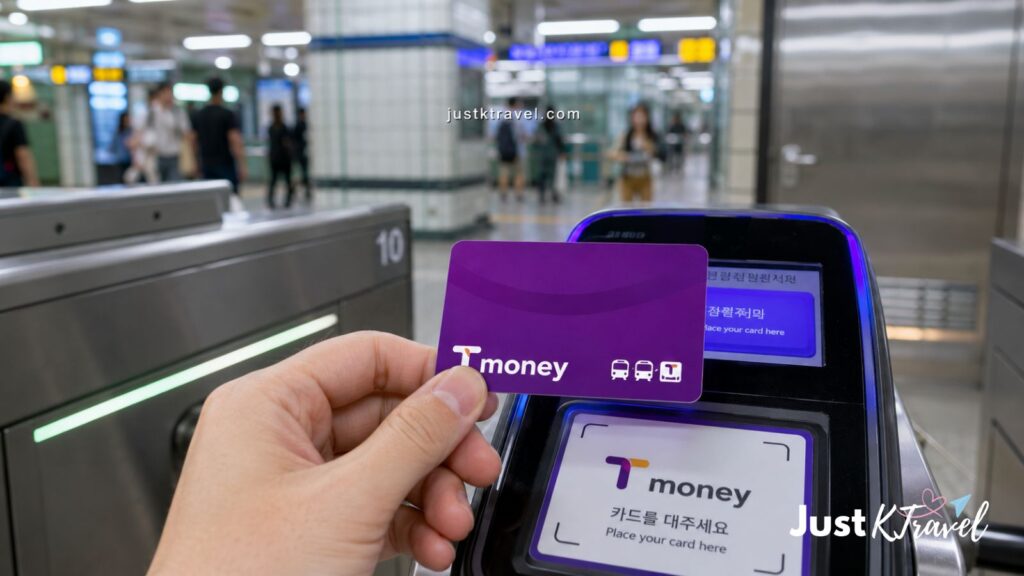
The T-money Card is Korea’s most popular transportation card and has been used by locals and travelers for many years.
It works like a rechargeable prepaid card. You add money to your balance, then use it whenever you take public transportation.
Unlike some transportation passes that only work in Seoul, T-money is useful throughout South Korea.
Where Can You Use T-money?
You can use T-money for:
✅ Seoul subway
✅ Seoul buses
✅ Busan transportation
✅ Jeju buses
✅ AREX Airport Railroad
✅ Some taxis
✅ Convenience stores
This flexibility is one of the biggest reasons I recommend it to most tourists.
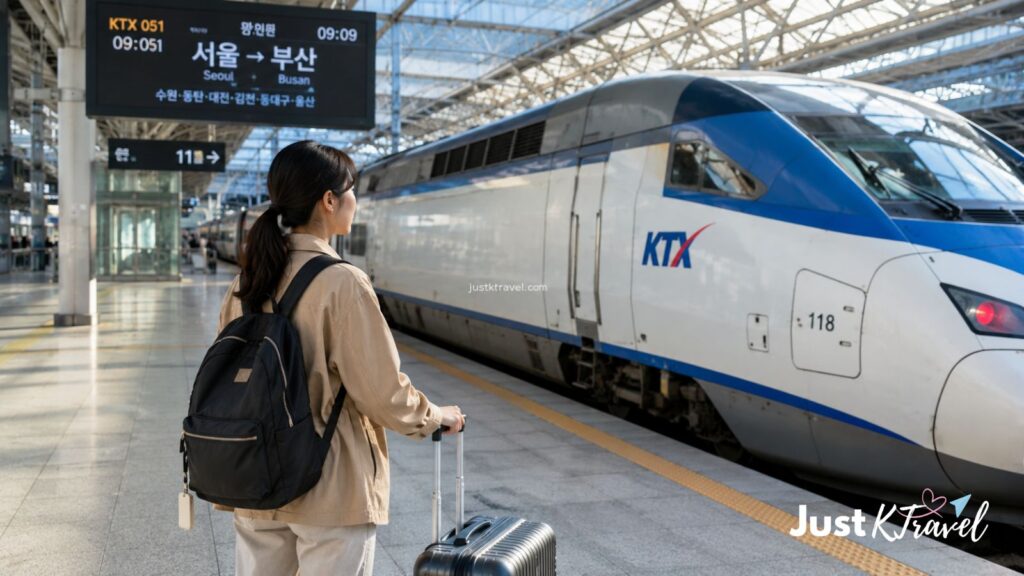
T-money is especially useful if you plan to explore beyond Seoul. For example, if your itinerary includes Busan, you can continue using the same transportation card instead of buying a separate one for the city.
If you’re traveling from Seoul to Busan, the KTX high-speed train is one of the easiest options for getting between the two cities. You can also book KTX tickets in advance through Klook if you prefer having your transportation arranged before your trip.
If you’re flying directly from Incheon Airport to Busan or planning a Seoul–Busan itinerary, transportation planning ahead of time can save you a lot of stress. Check my guide on [Incheon Airport to Busan: Complete Transportation Guide (2026)] for the different options, including KTX and other routes.
If you’re planning to visit Jeju Island, remember that T-money can be used for buses around the island, but you’ll still need to arrange a separate flight from the mainland. Many visitors fly from Seoul (Gimpo Airport) to Jeju because it is quick and affordable. Booking your flight early can help you find better schedules and prices.
💳 T-money Card Pros and Cons
Pros | Cons |
Works in many cities across Korea | Requires reloading balance |
Easy for first-time visitors | Not unlimited rides |
Great for Seoul + Busan trips | Need to monitor remaining balance |
Convenient for short and long trips | Some refunds can be inconvenient |
🌟 My Experience Using T-money as a Traveler
Even after living in Korea for years, I still find T-money the easiest option when traveling.
As someone who enjoys exploring different cities, I like that I can use the same card in Seoul, Busan, Jeonju, and other destinations without worrying about buying another transportation pass.
For solo travelers especially, I think T-money is a stress-free choice. You can explore at your own pace without worrying about whether a transportation pass is worth the cost or if you will use enough rides.
If you’re visiting Korea for the first time and your itinerary includes more than just Seoul, this is usually the card I recommend.
Once your transportation is ready, the next step is planning the experiences you want to enjoy. Seoul has everything from palace visits and food tours to cultural activities, while Busan offers amazing coastal experiences, markets, and local attractions.
You can check popular Seoul activities and Busan experiences on Klook before your trip, especially if you want to reserve popular attractions in advance.
When traveling alone, I also find that choosing the right accommodation location makes a huge difference. Staying near subway stations means easier early morning starts, safer and simpler late-night returns, and less time spent figuring out transportation after a long day of exploring.
If you’re traveling solo, check my guide on [Where to Stay in Seoul Alone (2026): Best Budget Solo Accommodation Guide] for recommended areas and accommodation tips.
🌿 What Is the Climate Card?
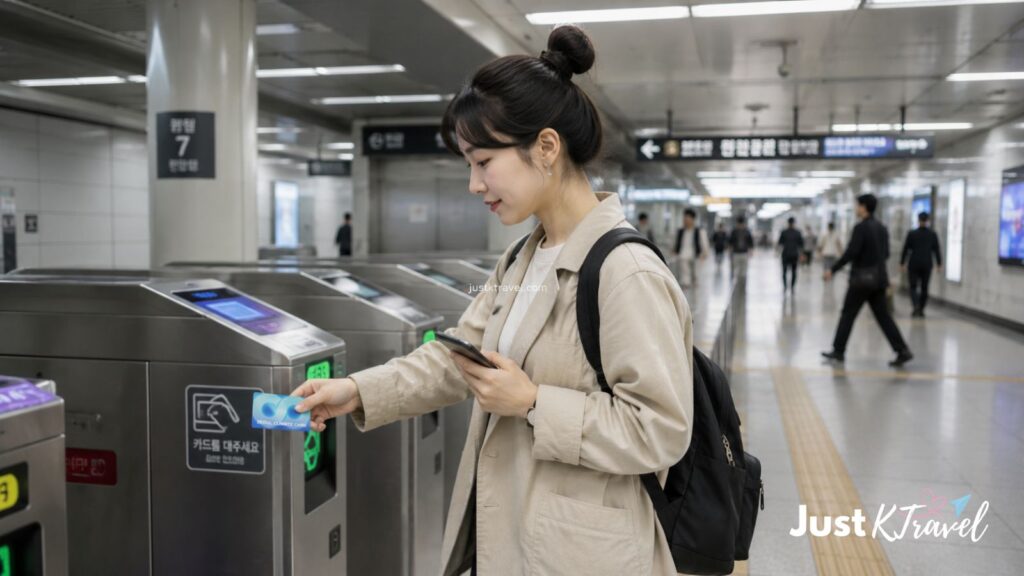
The Climate Card is Seoul’s unlimited transportation pass designed for travelers who plan to use public transportation frequently within the city.
Instead of paying for each subway or bus ride separately, you purchase a pass for a specific period and enjoy unlimited rides within the included coverage.
This can be a great option if you are spending several days exploring Seoul and expect to use public transportation multiple times every day.
Since the Climate Card is mainly useful for exploring Seoul, choosing the right area to stay can make your trip much easier. I personally recommend staying somewhere with convenient subway access so you can spend less time commuting and more time enjoying the city.
Popular areas like Myeongdong, Hongdae, and Gangnam are great choices for first-time visitors because they have excellent transportation connections, plenty of restaurants, and easy access to Seoul’s top attractions.
Before booking your hotel, check my guide on [Best Areas to Stay in Seoul for First-Time Visitors (2026 Guide)] to find the best neighborhood for your travel style.
🌿 Climate Card Coverage
The Climate Card can generally be used for:
✅ Seoul subway lines included in the program
✅ Seoul city buses included in the program
✅ Selected transportation services depending on the pass type
However, the biggest limitation is that it is mainly focused on Seoul transportation.
If you are planning to visit Busan, Jeju, Gyeongju, or other cities, you will likely still need another transportation option.
🌿 Climate Card Pros and Cons
Pros | Cons |
Unlimited rides within coverage | Mainly useful in Seoul |
Great for frequent subway users | Not ideal for short sightseeing days |
Can save money with many daily trips | Coverage limitations |
Convenient for Seoul-only trips | Less flexible than T-money |
🆚 T-money Card vs Climate Card Comparison
Feature | T-money Card | Climate Card |
Best for | Most tourists | Seoul-focused travelers |
Payment style | Pay per ride | Unlimited transportation |
Coverage | Korea-wide | Mainly Seoul |
Good for Busan/Jeju | ✅ Yes | ❌ No |
Best for first-time visitors | ✅ Yes | Depends |
Flexibility | ⭐⭐⭐⭐⭐ | ⭐⭐⭐ |
Which Transportation Card Should You Buy?

Choose T-money Card if:
✅ This is your first Korea trip
✅ You are visiting Seoul and other cities
✅ You are staying less than one week
✅ You want the easiest option
✅ You prefer flexibility
My recommendation:
Most first-time visitors will find the T-money Card the easiest choice because it gives you more freedom without worrying about whether you are using enough rides to make a pass worthwhile.
If your itinerary includes both Seoul and Busan, remember that each city offers a completely different experience. Seoul is great for shopping, cafés, and historic attractions, while Busan is known for beaches, seafood, and coastal scenery. Planning your accommodations in advance can help you spend less time commuting and more time exploring.
Before your trip, check my guide on [Best Areas to Stay in Busan for First-Time Visitors (2026 Guide)] to find the best neighborhoods based on your travel style.
Choose Climate Card if:
✅ You are staying mostly in Seoul
✅ You will use buses and subway many times every day
✅ You are visiting Seoul for several days
✅ You want unlimited rides
If you are planning a Seoul-focused trip, choosing the right neighborhood can make your daily sightseeing much easier. Staying near subway stations means you can reach popular attractions, restaurants, and shopping areas more conveniently.
For first-time visitors, I recommend checking [Best Areas to Stay in Seoul for First-Time Visitors (2026 Guide)] before booking your hotel to find a location that matches your itinerary.
My Recommendation Based on Traveler Type
Traveler Type | Recommended Card |
First-time Korea visitor | T-money Card |
Seoul + Busan itinerary | T-money Card |
Solo budget traveler | T-money Card |
Seoul-only long stay | Climate Card |
Family exploring Seoul | T-money Card |
Traveler using subway all day | Climate Card |
Where to Buy a T-money Card
You can usually purchase a T-money Card at:
✅ Convenience stores such as CU, GS25, and 7-Eleven
✅ Subway stations
✅ Airport convenience stores
After buying the card, you can recharge it at convenience stores or subway machines.
If you prefer to prepare your transportation before arriving, you can also purchase a T-money Card through Klook before your trip. I personally like having important travel items ready before my flight because it saves time after landing, especially after a long flight or when arriving at a busy airport.
Having your transportation card ready means you can start using Seoul’s subway and buses right away without needing to search for a card after arrival.
Before your trip, I also recommend preparing your internet connection in advance. You will likely use maps, translation apps, and transportation apps as soon as you arrive, so having mobile data ready makes your first day in Korea much easier.
Check out my guide on [Best SIM Card, eSIM or Pocket WiFi for Korea? (2026 Tourist Guide)] to compare the best options for staying connected during your trip.
Where to Buy Climate Card
Climate Card availability depends on the current Seoul transportation policy.
Tourists can usually purchase it through:
Seoul subway stations
Official Seoul transportation locations
Selected convenience stores
Before your trip, check the latest requirements and available options because transportation programs can change.
💡 Tips From My Experience Using Korea Transportation
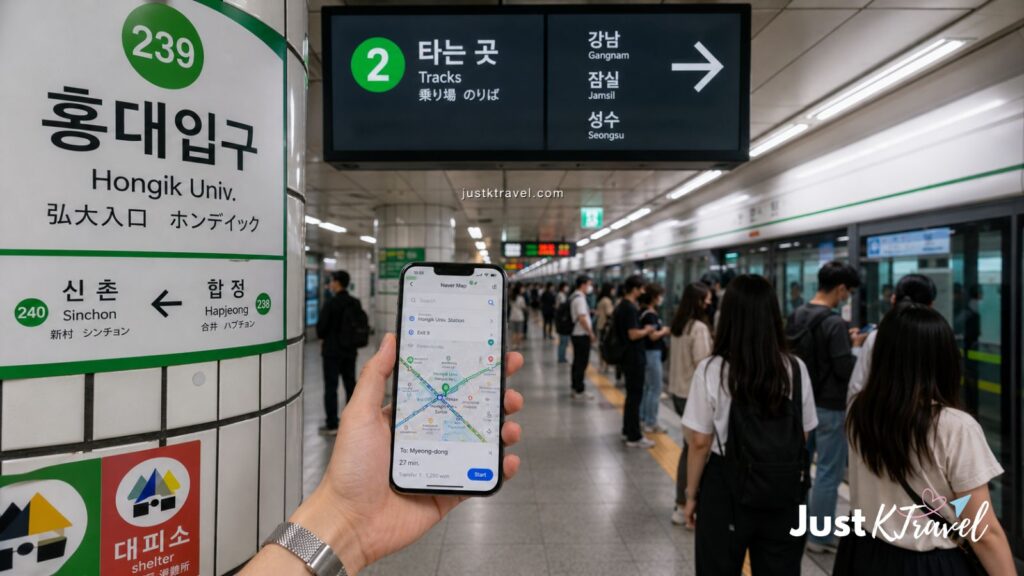
After years of using Korea’s subway and buses, these small tips can make your trip easier:
🚇 Avoid Rush Hour
Seoul can get extremely crowded during:
7:00–9:00 AM
5:00–7:00 PM
If possible, travel outside these times.
📱 Download Naver Map Before Arriving
Google Maps is limited in Korea, so I personally recommend downloading Naver Map before your trip. It is the app I use most often when exploring Seoul and other parts of Korea.
It helps with:
✅ Subway routes
✅ Walking directions
✅ Bus schedules
✅ Restaurant locations
I also recommend preparing your essential travel apps before arriving. Having these ready makes your first few days in Korea much easier, especially when navigating unfamiliar neighborhoods, checking transportation routes, or communicating with locals.
If you’re visiting Korea for the first time, check out my guide to [15 Essential Apps to Download Before Your Korea Trip (2026 Tourist Guide)] for the apps I personally recommend.
💵 Carry Some Cash
Korea is becoming increasingly cashless, and most restaurants, cafés, and stores accept international credit cards. However, I still recommend carrying some Korean Won for small purchases, traditional markets, street food, and transportation card top-ups.
Some transportation card recharge machines require cash, so having a small amount available can save you time and stress.
If you’re unsure how much money to prepare for your trip, I recommend checking my guide on [How Much Money to Bring to Korea (2026 Budget Guide for First-Time Visitors)].
You can also read my [Cash vs Card in Korea: What Most Travelers Actually Use (2026 Guide)] to understand when you should use cash or your card during your trip.
👟 Wear Comfortable Shoes
Exploring Seoul usually means a lot of walking. It is common to walk 15,000+ steps while sightseeing.
🔋 Bring a Power Bank
Your phone will become your:
Map
Translator
Camera
Transportation planner
A power bank can save you during a long day outside.
Frequently Asked Questions
Is T-money Card better than Climate Card for tourists?
For most tourists, yes. T-money is more flexible because it works in many areas across Korea, not just Seoul.
Can I use T-money in Busan?
Yes. T-money can be used for public transportation in many cities, including Busan.
Is Climate Card worth it for a 5-day Seoul trip?
It depends on your schedule. If you plan to use buses and subway several times every day, it may help you save money.
Can foreigners buy Climate Card?
Yes, tourists can use Climate Card options available for visitors, but check the latest requirements before traveling.
Do I need both T-money and Climate Card?
Usually no. Most travelers only need one transportation card depending on their itinerary.
Final Thoughts
Both the T-money Card and Climate Card can make exploring Seoul much easier, but the best choice depends on your travel style and itinerary.
For most first-time visitors, I personally recommend the T-money Card because it is simple, flexible, and works beyond Seoul. It is especially useful if you are planning to visit Busan, Jeju, or other cities during your Korea trip.
If you are staying only in Seoul and plan to use the subway and buses several times every day, the Climate Card can be a great option and may help you save money.
From my experience traveling around Korea, having the right transportation card removes one more thing to worry about. Instead of spending time thinking about tickets and payments, you can focus on what really matters — exploring new neighborhoods, enjoying Korean food, and creating unforgettable memories.
For me, some of my favorite Korea moments are not always the famous attractions. They are simple experiences like trying street food at local markets, discovering small restaurants, and finding new snacks to bring home.
If you love exploring Korean food, you may also enjoy my guides on [11 Korean Street Foods First-Time Visitors Should Try] and [What Korean Snacks Should You Bring Home?].
Before your flight, I also recommend checking my [Korea Travel Checklist: Everything You Need Before Your Trip (2026 Guide)] to make sure you have everything prepared, from transportation and money to packing essentials.
I hope this guide helps you choose the best transportation card for your Korea adventure. Whether you choose T-money or Climate Card, having your transportation ready means you can spend more time enjoying everything South Korea has to offer. 🇰🇷
Here are some food guides to help you plan:
🍽️ Where to Eat in Myeongdong: 10 Best Restaurants for First-Time Visitors
Discover beginner-friendly restaurants in one of Seoul’s most popular areas.
🍽️ 10 Best Places to Eat in Hongdae for First-Time Visitors
Great options for cafés, Korean food, and casual dining around this lively neighborhood.
🍽️ 10 Best Cheap Restaurant Chains in Korea for Solo Travelers
My budget-friendly recommendations for solo travelers who want tasty meals without spending too much.
🍽️ Best Restaurants in Insadong: 8 Must-Try Places for First-Time Visitors
Perfect if you want to try traditional Korean food while exploring a historic Seoul neighborhood.
🍽️ 10 Best Restaurants Near Haeundae Beach, Busan
Helpful if you’re planning a Busan trip and want great food near the beach.
🍽️ Best Restaurants Near Gwangalli Beach, Busan
Enjoy delicious meals with beautiful views of Gwangan Bridge.
👤 About the Author
Hi, I’m Richelle, the creator of Just KTravel, based in South Korea.
I share simple and practical Korea travel guides from my own experience — including seasonal spots, transport tips, hidden places, and easy itineraries.
I started this blog after visiting Korea as a traveler myself, and now I write to help others plan their trips with less stress and more confidence.
My goal is to make Korea travel easier and more enjoyable for everyone, especially first-time visitors.
💬 Need Help Planning Your Korea Trip?
Have questions about traveling in Korea or planning your itinerary?
Join our Korea Travel Facebook community where travelers share real experiences, tips, and advice on transportation, accommodation, and seasonal travel in South Korea.
Disclosure:
This post may contain affiliate links to services and experiences I recommend based on personal use. If you make a booking through them, I may earn a small commission at no extra cost to you. I really appreciate your support for Just KTravel.