
💸 Best Place to Exchange Money in Korea: Airport vs Myeongdong vs ATM (2026 Guide)
Hi! Just KTravel here 👋
Table of Contents
ToggleI’ve been exploring South Korea since 2014, living here for over 6 years, and I’m still discovering new places across the country. Through firsthand experiences, I share practical travel guides, detailed itineraries, transportation tips, and local recommendations to help travelers experience Korea beyond the usual tourist spots.
👉 Join our Korea Travel Facebook Group to connect with fellow travelers, ask questions, share your Korea adventures, and get real-time travel tips, recommendations, and updates.
Wondering where to exchange money in South Korea? Should you exchange at the airport, use an ATM, or wait until you reach Myeongdong?
After living in South Korea for more than 6 years and traveling around the country regularly, this is one of the most common questions I receive from first-time visitors. The good news is that exchanging money in Korea is generally easy and safe. The bad news is that where you exchange your money can make a noticeable difference in how much Korean Won (KRW) you receive.
Before your trip, I also recommend downloading a few useful travel apps that can make payments, transportation, navigation, and communication much easier. You can read my guide on 15 Essential Apps to Download Before Your Korea Trip.
I’ve personally exchanged money at airports, banks, exchange counters in Myeongdong, and simply withdrawn cash from Korean ATMs. Each option has advantages and disadvantages depending on your travel style, arrival airport, and how much cash you need.
In this guide, I’ll compare the three most popular ways to get Korean Won:
Airport exchange counters
Myeongdong money changers
International ATMs
By the end, you’ll know exactly where to exchange your money and how to avoid unnecessary fees during your Korea trip.
Quick Answer: Where Should You Exchange Money in Korea?
If you’re looking for the simplest answer:
Best exchange rate: Myeongdong money changers
Most convenient: International ATM withdrawals
Best for immediate needs: Airport exchange counters
My personal recommendation for most travelers is:
- Exchange a small amount at the airport for transportation and food.
- Exchange the majority of your cash in Myeongdong.
- Keep an international debit card as a backup.
This strategy usually gives the best balance between convenience and exchange rates.
Do You Need Cash in Korea?
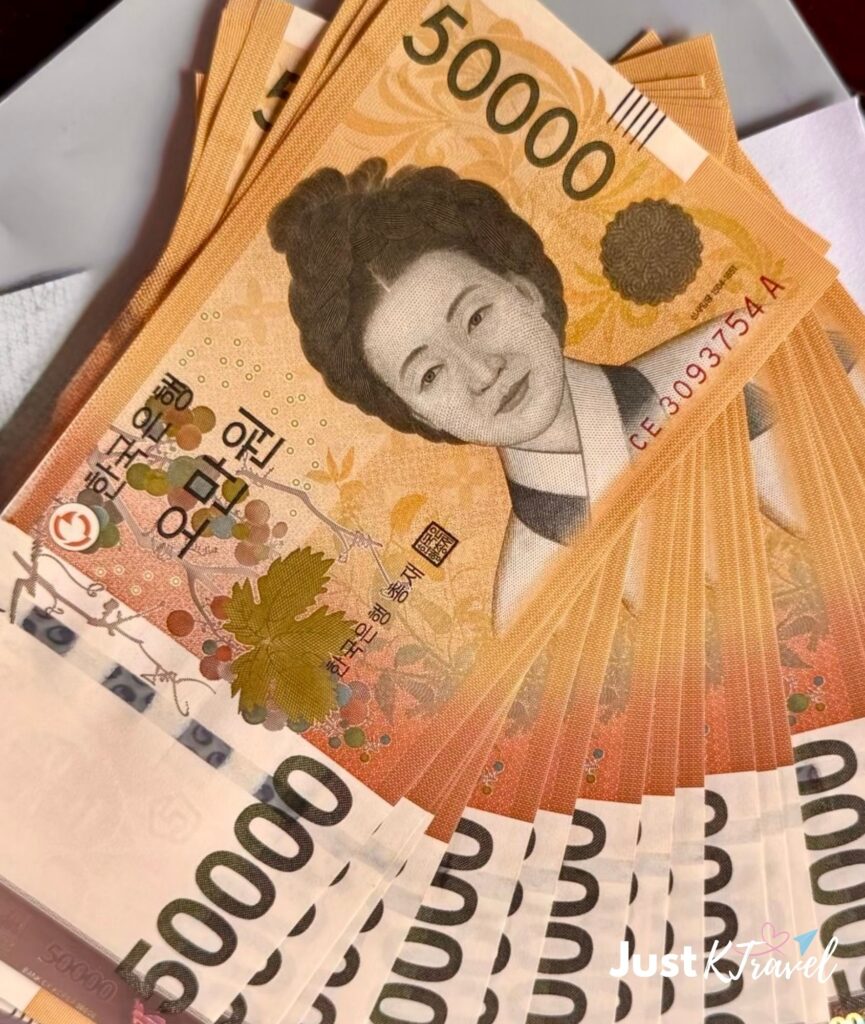
Before exchanging a large amount of money, it’s important to know that Korea is one of the most card-friendly countries in Asia.
If you’re wondering whether you should rely mostly on cash or credit cards during your trip, I recently put together a detailed guide on Cash vs Card in Korea: What Most Travelers Actually Use (2026 Guide), where I break down how most visitors actually pay for things during their trip.
You can use credit cards or debit cards at:
Restaurants
Cafes
Hotels
Department stores
Convenience stores
Subway stations
Tourist attractions
However, I still recommend carrying some cash because you’ll occasionally encounter:
Traditional markets
Small food stalls
Street food vendors
Local festivals
Rural destinations
Transportation card top-ups
For most travelers, around ₩20,000–₩50,000 cash per day is more than enough unless you’re shopping heavily.
Option 1: Exchange Money at the Airport
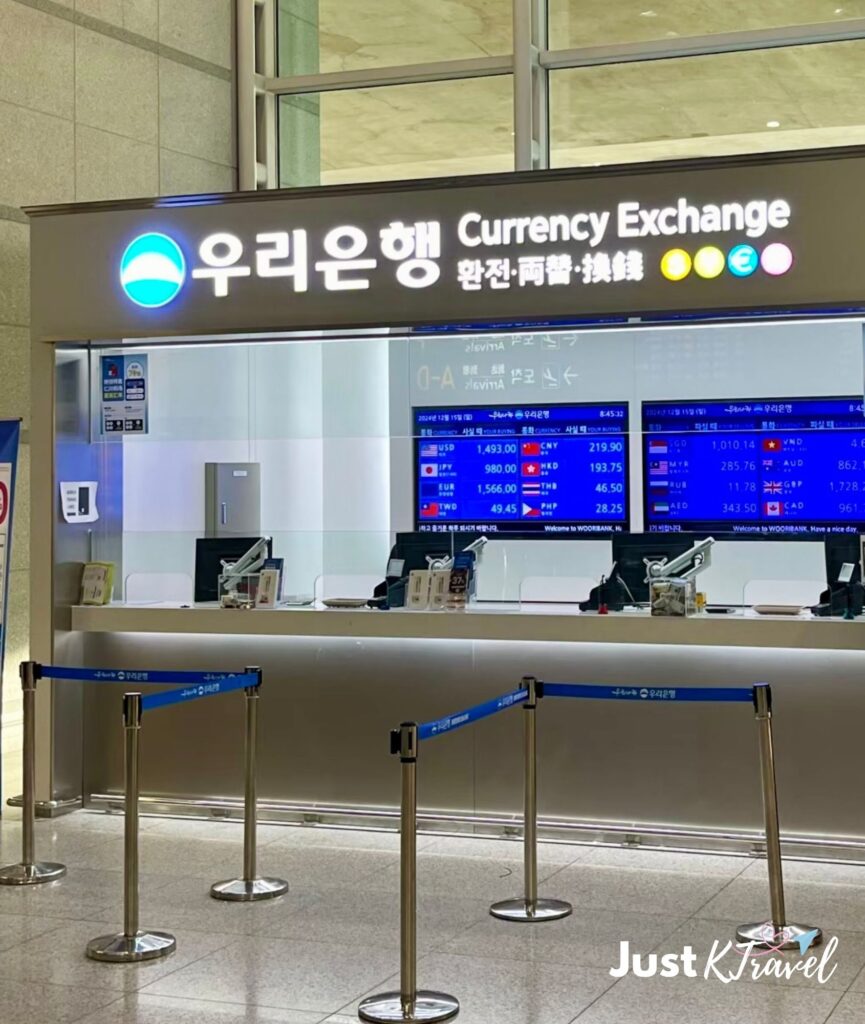
Most travelers arriving in Korea land at Incheon Airport and immediately see several currency exchange counters.
It feels convenient because you’re already there and likely need Korean Won right away. I’ve done this many times when arriving late at night or when I needed cash immediately for transportation.
Advantages of Airport Currency Exchange:
-Convenience
The biggest advantage is obvious. You can exchange money immediately after landing. If you’re arriving at Incheon Airport for the first time, it can also help to understand your transportation options into Seoul before deciding how much cash you’ll need immediately after arrival. My guide on How to Get from Incheon Airport to Seoul (2026 Guide to Airport Transfer Options) covers the different ways to reach the city and what you can expect to pay.
No need to search for exchange offices or banks later.
-Good for Transportation
You’ll have cash available for:
Airport buses
Taxis
Food
Emergencies
If you prefer to arrange transportation before arriving, many travelers book airport transfers or AREX train tickets in advance.
🚆 Check Airport Transfer Options on Klook
-Multiple Exchange Counters:
Airports typically have several exchange providers competing with each other.
This gives travelers options.
Disadvantages of Airport Currency Exchange
-Less Favorable Rates
Airport exchanges are usually convenient but not the most competitive.
The difference may seem small at first, but if you’re exchanging several hundred dollars, euros, or pounds, it can add up.
-Service Fees
Some providers include additional fees or wider exchange spreads.
Always check the final amount you’ll receive before proceeding.
My Recommendation for Airport Exchange:
I normally exchange only enough for the first day.
For example:
-Transportation into Seoul if you haven’t pre-booked your airport transfer.
-A meal
-Emergency cash
Around:
USD $50–100
EUR €50–100
Similar equivalent amounts Then I exchange the rest elsewhere.
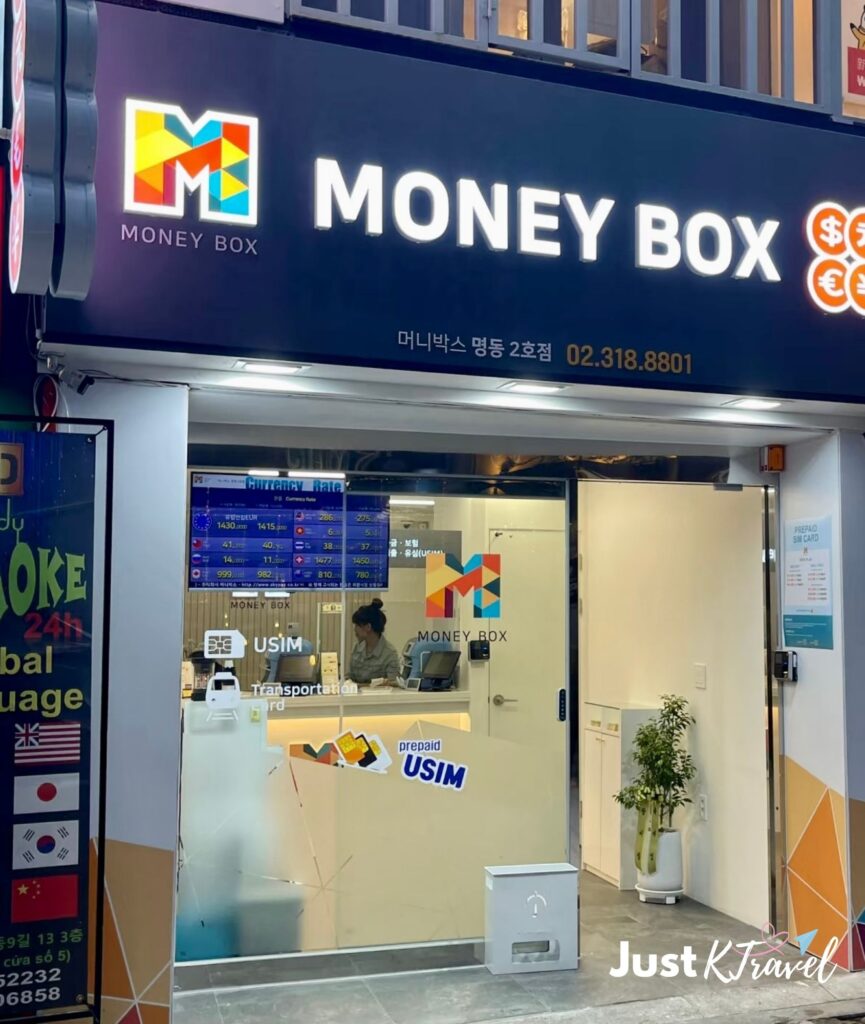
Option 2: Exchange Money in Myeongdong
If you’ve done any research about money exchange in Korea, you’ve probably heard about Myeongdong.
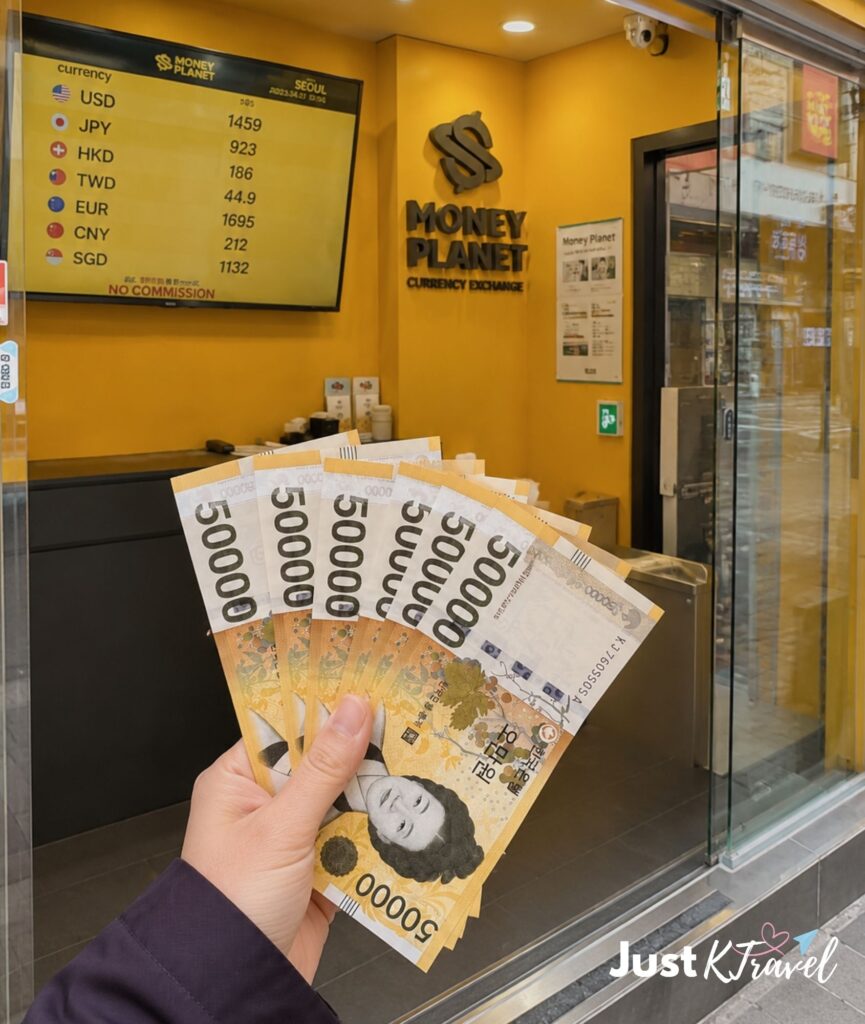
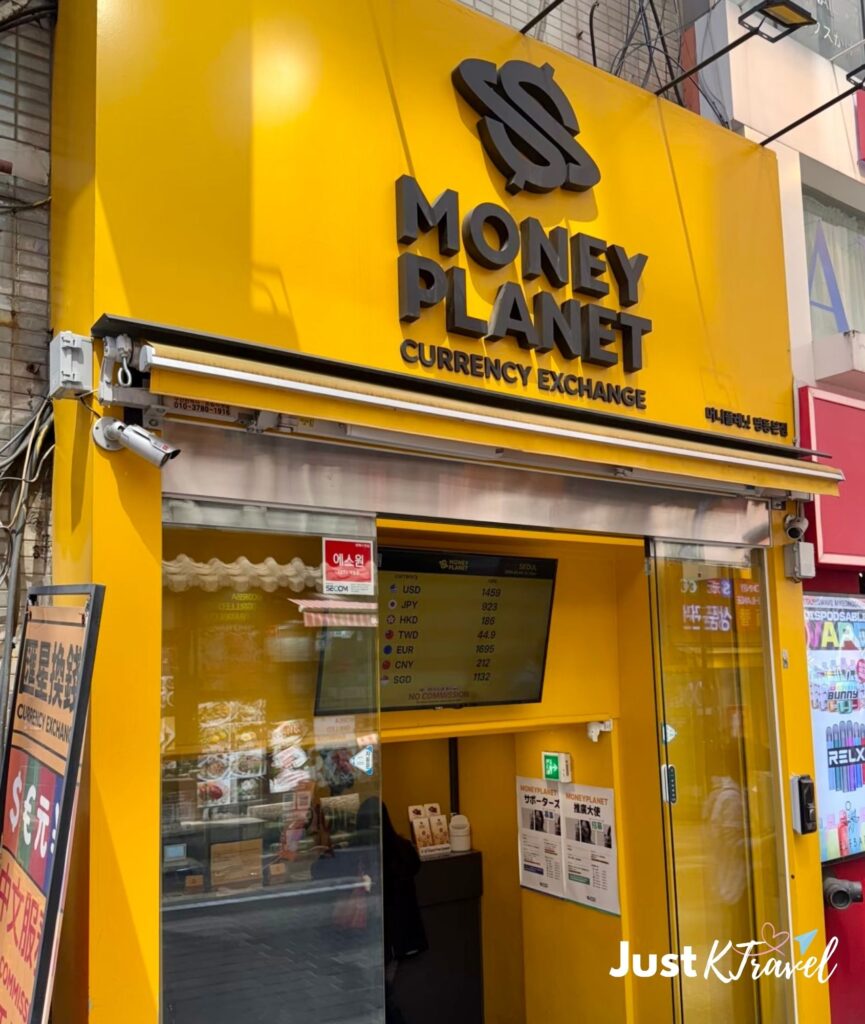
There’s a reason why experienced travelers recommend it. For years, Myeongdong has been known for offering some of the best exchange rates in Seoul. Many travelers specifically wait until they reach Myeongdong before exchanging larger amounts.
If you’re planning to exchange money in Myeongdong, staying nearby can save time and make it easier to compare exchange rates during your trip. You can check hotel prices in the area before your visit.
👉 Check Myeongdong Hotels on Agoda
Why Myeongdong Is Popular
The area has numerous exchange shops competing for customers. Competition generally results in better rates. Unlike airport locations where convenience is the main selling point, Myeongdong exchange businesses attract customers through favorable exchange rates.
Advantages of Myeongdong Exchange Counters:
-Better Exchange Rates
This is the main reason travelers come here.
You often receive more Korean Won compared to airport exchanges.
-Many Shops Nearby
If one shop’s rate isn’t attractive, another one may offer slightly better terms.
You can compare several counters within a few minutes.
-Tourist-Friendly
Staff are accustomed to foreign visitors.
Many display rates clearly outside.
Disadvantages of Myeongdong Exchanges
-You Must Travel There First
If you’re staying outside Seoul, visiting Myeongdong may not be convenient.
-Rates Can Change Daily
Exchange rates fluctuate.
A rate you see online may not be available when you arrive.
-Not Ideal for Late-Night Arrivals
Many counters close in the evening.
Travelers arriving very late may need another option.
My Experience Exchanging in Myeongdong:
Whenever friends visit Korea and plan to stay in Seoul for several days, I usually tell them not to exchange everything at the airport.
Instead:
Exchange a small amount at the airport
Visit Myeongdong the next day
Exchange the remainder there
In many cases, they end up receiving noticeably more Korean Won.
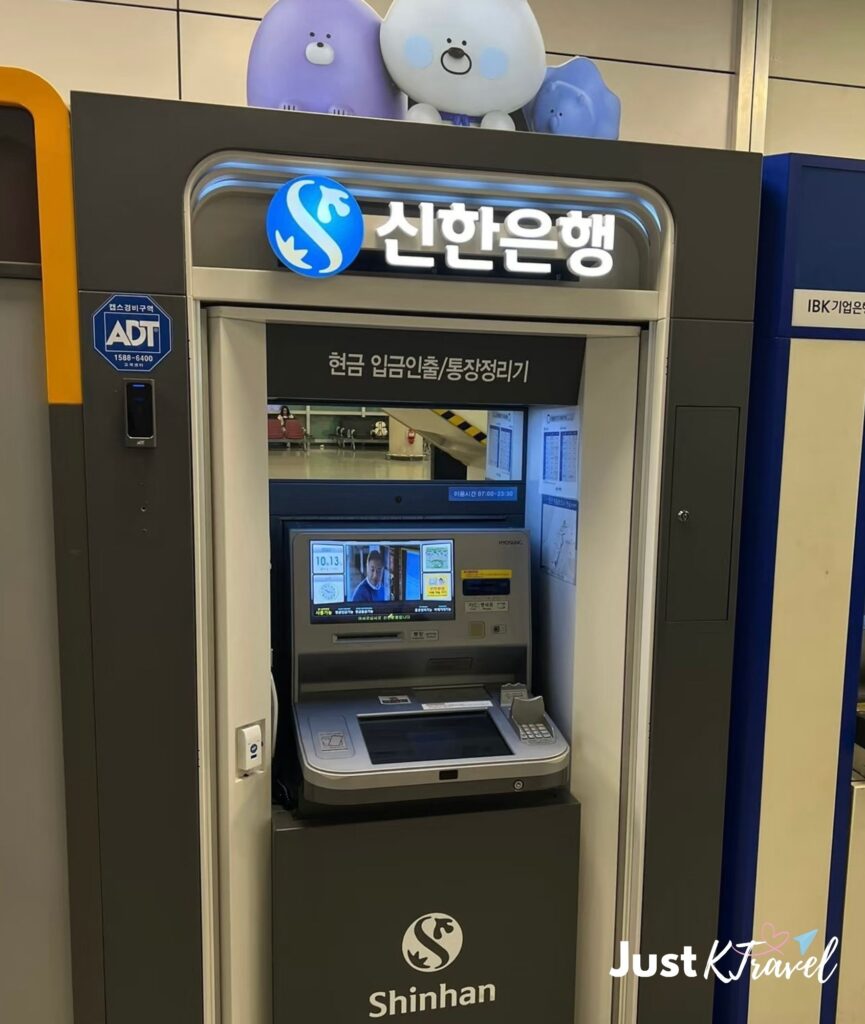
Option 3: Using International ATMs in Korea
In recent years, international ATM withdrawals have become increasingly popular.
Many travelers simply use their debit cards to withdraw Korean Won directly. Depending on your bank, this can actually be one of the easiest options.
Where to Find International ATMs
You’ll commonly find them at:
Airports
Subway stations
Major tourist areas
Convenience stores
Banks
Look for signs showing:
Visa
Mastercard
Cirrus
Plus
UnionPay
Advantages of Using ATMs
-Extremely Convenient
No need to carry large amounts of foreign cash.
-Good Security
You’re not walking around with hundreds of dollars waiting to exchange.
-Access Cash Anytime
Many ATMs operate 24 hours.
-Competitive Rates
Some international debit cards offer exchange rates very close to market rates.
Disadvantages of ATMs
-Foreign Transaction Fees
Your bank may charge:
International withdrawal fees
Currency conversion fees
ATM operator fees
-Bank Policies Vary
A great ATM experience for one traveler may be expensive for another.
-ATM Compatibility
Some foreign cards occasionally encounter issues at certain machines.
Airport vs Myeongdong vs ATM Comparison
Feature | Airport Exchange | Myeongdong Exchange | ATM Withdrawal |
Convenience | Excellent | Moderate | Excellent |
Exchange Rate | Fair | Usually Best | Good to Excellent |
Availability | Immediate | Limited to location | Widely Available |
Best for First Day | Yes | No | Yes |
Large Amounts | Not Ideal | Excellent | Depends on bank |
Late-Night Arrivals | Good | Limited | Good |
Fees | Built into rate | Usually lower spread | Depends on bank |
What I Personally Do
After years of living and traveling around Korea, my usual approach is:
If Friends Are Visiting Seoul
Exchange small amount at airport
Exchange larger amount in Myeongdong
Use credit card for most purchases
For visitors staying in Seoul, Myeongdong is often one of the easiest places to exchange money because many first-time travelers choose to stay nearby. If you’re still deciding where to book your hotel, check out my guide to the Best Areas to Stay in Seoul for First-Time Visitors (2026 Guide).
If Traveling Outside Seoul Immediately
Use ATM withdrawals
Carry backup card
Avoid carrying excessive cash
This is especially common for travelers who plan to explore Busan or Jeju immediately after arriving in Korea. Since Myeongdong is located in Seoul, many visitors find it easier to withdraw cash from ATMs instead. If Busan or Jeju are part of your itinerary, you may also find these guides helpful: Best Areas to Stay in Busan for First-Time Visitors (2026 Guide) and Best Areas to Stay in Jeju for First-Time Visitors (2026 Guide).
If Staying Less Than 3 Days
Sometimes I simply use cards and ATMs only.
The difference in exchange rates may not justify the extra effort.
Tips to Get the Best Exchange Rate in Korea
1.Avoid Exchanging Everything at the Airport
Convenience comes at a cost. Use airport exchanges only for initial expenses.
2.Compare Multiple Counters
Even within the same area, rates can vary slightly. Always compare before exchanging large amounts.
Personal Tip: In Myeongdong, I often find some of the most competitive exchange rates at the money changers near the Chinese Embassy. Since rates can change daily, it’s still worth checking a few exchange boards before exchanging larger amounts.
3.Notify Your Bank Before Traveling
Some banks block overseas transactions for security reasons. Inform them before departure. It’s also worth arranging your mobile data before arriving in Korea, as having internet access makes it much easier to locate ATMs, compare exchange rates, navigate transportation, and access maps. I compare the different options in my guide to the Best SIM Card, eSIM or Pocket WiFi for Korea? (2026 Tourist Guide).
Many travelers also pre-book essentials such as SIM cards, eSIMs, transportation passes, and attraction tickets before arriving.
📱 Browse Korea Travel Essentials on Klook
4.Use a Travel-Friendly Debit Card
Certain banks offer:
Low foreign transaction fees
Better exchange rates
Reduced ATM charges
These benefits can save significant money during longer trips.
5.Decline Dynamic Currency Conversion
If an ATM or card terminal asks whether you want to be charged in:
Your home currency
Korean Won
Choose Korean Won.
This usually results in a better exchange rate.
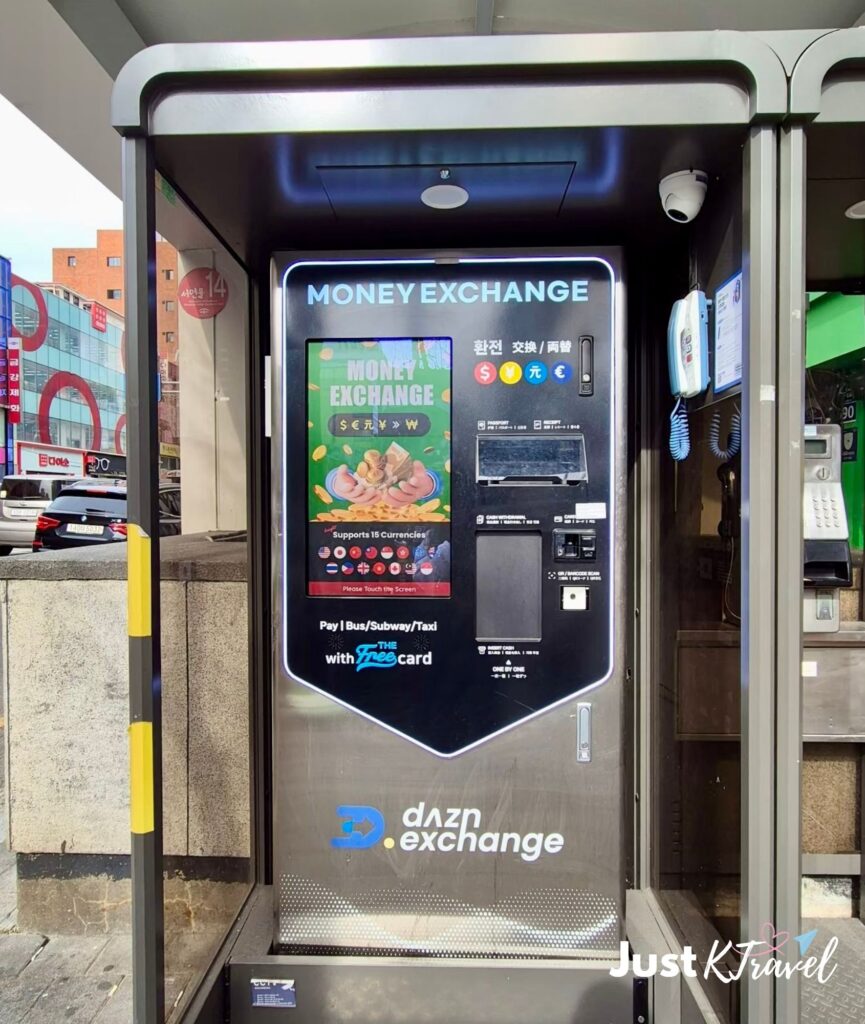
Common Mistakes Tourists Make
1.Exchanging All Money Before Arriving
Many visitors exchange large amounts in their home country.
In my experience, rates are often better after arriving in Korea.
2.Carrying Too Much Cash
Korea is highly card-friendly.
You generally don’t need huge amounts of cash.
3.Ignoring ATM Fees
Always check your bank’s international fee structure.
Small fees can add up after multiple withdrawals.
4.Not Bringing a Backup Card
I’ve seen travelers struggle after losing access to a single card.
Always carry a backup payment method.
Is It Better to Bring Cash or Use Cards in Korea?
For most visitors, a combination works best.
Bring:
-Some cash
-One primary credit card
-One backup card
-A debit card for ATM withdrawals
This gives flexibility throughout your trip.
Frequently Asked Questions
1.Is Myeongdong really the best place to exchange money in Korea?
In many cases, yes. Myeongdong is known for offering some of the most competitive exchange rates in Seoul because multiple exchange businesses compete for customers.
2.Can I use US dollars in Korea?
No. Most businesses accept only Korean Won or card payments.
3.Should I exchange money before arriving in Korea?
A small amount can be helpful, but many travelers receive better rates after arriving in Korea.
4.Are Korean ATMs foreign-card friendly?
Many are. Look for ATMs displaying Visa, Mastercard, Cirrus, Plus, or UnionPay logos.
5.How much cash should I carry in Korea?
The answer depends largely on how you prefer to pay while traveling. Some visitors rely almost entirely on cards, while others prefer carrying more cash for markets, street food, and smaller purchases. For a detailed breakdown, read my guide Cash vs Card in Korea: What Most Travelers Actually Use (2026 Guide).
6.Is Korea a cashless country?
Almost. Credit cards and mobile payments are accepted nearly everywhere, but carrying some cash is still recommended.
7.Can I exchange money outside Seoul?
Yes. Banks, airports, and exchange counters are available in major cities such as Busan, Daegu, Incheon, and Jeju, though rates may not be as competitive as Myeongdong.
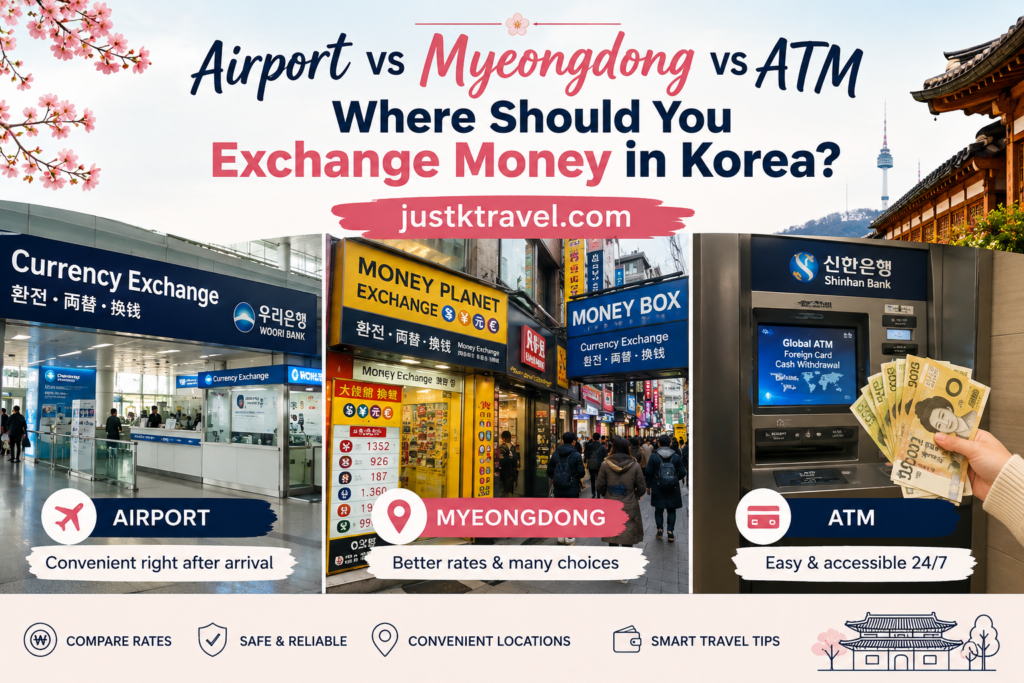
Final Verdict: Where Should You Exchange Money in Korea?
For most travelers, Myeongdong offers the best exchange rates and is usually the best place to exchange larger amounts of money.
If convenience is your priority, international ATMs are a great option and can save you time, especially if you don’t plan to visit Myeongdong. Meanwhile, airport exchange counters are best for getting a small amount of Korean Won immediately after arrival for transportation, food, or other essentials.
My Recommended Strategy
✅ Exchange a small amount at the airport upon arrival
✅ Exchange larger amounts in Myeongdong for better rates
✅ Keep a debit or travel card as a backup for ATM withdrawals
This simple approach gives you a balance of good exchange rates, convenience, and flexibility throughout your trip.
No matter which option you choose, planning ahead can help you avoid unnecessary fees and make your Korea trip smoother from the moment you land. 🇰🇷
✈️ Planning a trip to South Korea?
Subscribe to the JustKTravel newsletter for Korea travel tips, seasonal guides, transport advice, and new blog updates—so you can plan your trip with more confidence.
Get useful tips and updates delivered straight to your inbox (no spam, just helpful info).
[mc4wp_form id=”2761″]
Disclosure:
This post may contain affiliate links to experiences and services I personally use and recommend. If you book through them, I may earn a small commission at no extra cost to you. Thank you in advance ^^